UN Resolutions: A New Chapter in the Israel-Palestine Peace Process?
Exploring the impact of recent UN resolutions on the Israel-Palestine conflict and regional stability.
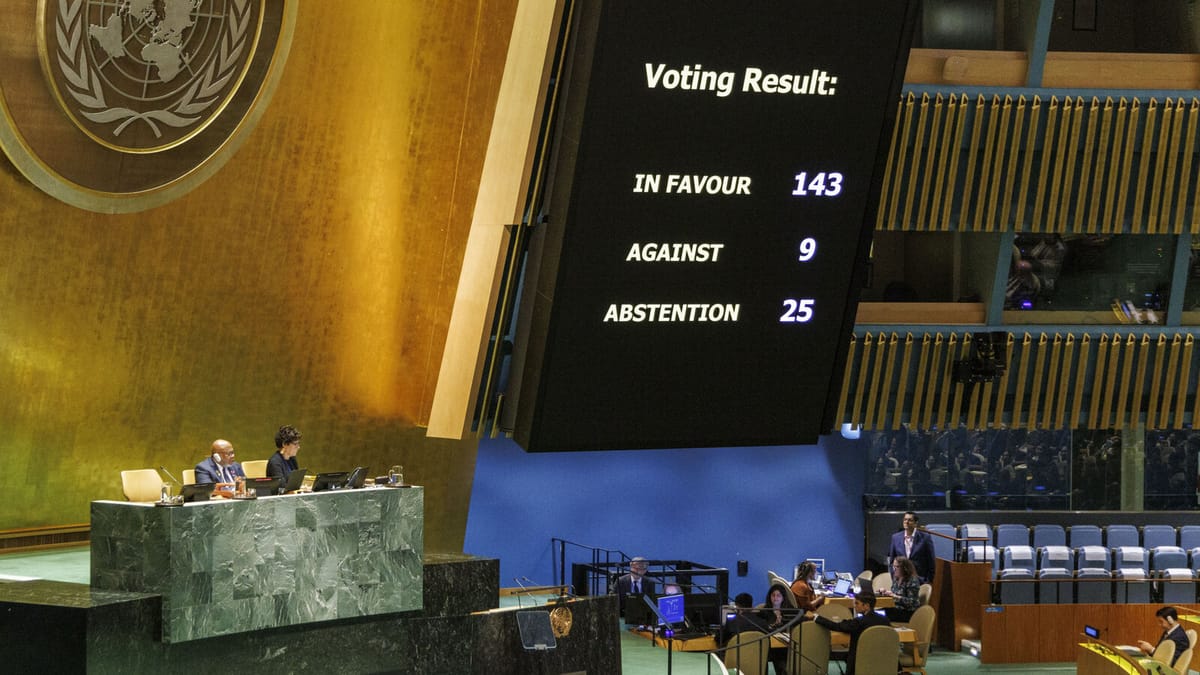
The adoption of United Nations Resolution 2334 on December 23, 2016, marked a significant moment in the ongoing Israel-Palestine conflict, as it demanded an immediate halt to Israeli settlement activities in the occupied Palestinian territories. This resolution was passed with 14 votes in favor and one abstention by the United States, highlighting a shift in international diplomatic dynamics concerning the conflict.
Resolution 2334 was prompted by a series of events that exacerbated tensions in the region. Notably, the continued expansion of Israeli settlements in the West Bank and East Jerusalem, areas considered occupied under international law, has been a persistent source of conflict. The resolution reaffirmed that these settlements have "no legal validity" and constitute a "flagrant violation" of international law, urging both parties to resume negotiations aimed at achieving a two-state solution.
In response to the resolution, Israel rejected its terms, with Prime Minister Benjamin Netanyahu denouncing it as "shameful" and stating that Israel would not comply with its provisions. The Israeli government also took diplomatic measures against countries that supported the resolution, recalling ambassadors and reducing diplomatic engagements. Conversely, Palestinian authorities welcomed the resolution as a step toward international recognition of their claims and rights, viewing it as a potential catalyst for renewed peace talks.
The humanitarian crises resulting from the conflict, including the 2014 Gaza War and subsequent escalations, have consistently drawn international attention and prompted calls for action. These crises have underscored the urgent need for a sustainable resolution to the conflict, with the UN playing a critical role in facilitating dialogue and advocating for adherence to international law. The passage of Resolution 2334 thus reflects ongoing international efforts to address the complex and deeply rooted issues at the heart of the Israel-Palestine conflict.
The Israel-Palestine conflict has its roots in the late 19th and early 20th centuries, with tensions escalating significantly following the end of World War II and the subsequent establishment of the State of Israel in 1948. This event led to the first Arab-Israeli war and the displacement of hundreds of thousands of Palestinians, an event Palestinians refer to as the Nakba, or "catastrophe." The conflict has since evolved through multiple wars, uprisings, and peace efforts, each leaving a lasting impact on the region's political landscape.
The United Nations has been involved in the Israel-Palestine conflict since its inception, beginning with the 1947 UN Partition Plan (Resolution 181), which proposed the division of Palestine into separate Jewish and Arab states. This plan was accepted by Jewish leaders but rejected by Arab leaders, setting the stage for decades of conflict. Over the years, the UN has passed numerous resolutions aimed at resolving the conflict, including Resolution 242 in 1967, which called for the withdrawal of Israeli forces from territories occupied during the Six-Day War and the recognition of every state's right to live in peace within secure and recognized boundaries.
Historical grievances continue to influence current negotiations and resolutions. The Palestinian demand for the right of return for refugees and the status of Jerusalem remain contentious issues. The UN's role has been to mediate and propose frameworks for peace, often emphasizing the need for a two-state solution as a viable path forward. However, the deep-seated mistrust between the parties and the complex historical narratives make the peace process challenging. The legacy of past conflicts and the failure of previous negotiations contribute to the skepticism surrounding new resolutions, as both sides remain entrenched in their positions, seeking international support to bolster their claims.
The Israel-Palestine peace process involves a myriad of actors, each with distinct positions and influences. The primary parties are the Israeli government and the Palestinian Authority, both of which have divergent views on recent UN resolutions. Israel, led by Prime Minister Benjamin Netanyahu, has consistently opposed resolutions perceived as undermining its sovereignty or security, such as Resolution 2334, which condemned Israeli settlement activity in occupied territories. Netanyahu's administration views such resolutions as biased and detrimental to direct negotiations.
On the Palestinian side, the Palestinian Authority, under President Mahmoud Abbas, supports UN resolutions that affirm Palestinian rights and international recognition. The Palestinian leadership views these resolutions as essential tools to pressure Israel into concessions and to bolster their claims for statehood, particularly in relation to borders and the status of Jerusalem. However, internal political dynamics, including the influence of Hamas in Gaza, complicate the Palestinian position. Hamas, which governs the Gaza Strip, has a more militant stance and often rejects compromises endorsed by the Palestinian Authority.
International stakeholders, including the United States, European Union, and Arab League, play significant roles in shaping the peace process. The United States, traditionally a staunch ally of Israel, has at times used its veto power in the UN Security Council to block resolutions unfavorable to Israel. The European Union generally supports a two-state solution and has criticized settlement expansion, aligning with many UN positions. Meanwhile, the Arab League backs Palestinian claims, advocating for resolutions that support Palestinian sovereignty and rights.
Political factions within both Israel and Palestine further influence the peace process. In Israel, right-wing parties often oppose concessions, while left-wing factions advocate for renewed dialogue. In Palestine, divisions between Fatah and Hamas create internal challenges, affecting the cohesiveness of their approach to international resolutions and negotiations.
The legal frameworks surrounding the Israel-Palestine conflict are deeply rooted in international law, with key documents including the United Nations Charter, the Fourth Geneva Convention, and various Security Council resolutions. The Fourth Geneva Convention, adopted in 1949, is particularly significant as it outlines the protections for civilians in times of war, prohibiting the transfer of an occupier's civilian population into occupied territory. This provision is frequently cited in discussions about Israeli settlements in the West Bank, which are deemed illegal under international law by many UN member states.
Recent UN resolutions, such as Resolution 2334 passed in December 2016, reaffirm the international community's stance against settlement expansion, stating that such activities constitute a "flagrant violation" under international law and have "no legal validity." The resolution demands that Israel cease all settlement activities, a call that has been met with resistance from the Israeli government, which argues that the resolution undermines its security and sovereignty. Israel's interpretation often hinges on historical and security claims, asserting that the territories in question are disputed rather than occupied.
Enforcing international law in this context presents significant challenges. The UN lacks direct enforcement mechanisms, relying instead on member states to uphold resolutions. However, geopolitical interests often lead to selective enforcement, with powerful states like the United States using their influence to shield allies from punitive measures. The US, for instance, has historically vetoed numerous Security Council resolutions critical of Israel, complicating the UN's ability to act decisively.
These legal and interpretative challenges underscore the complexity of the Israel-Palestine conflict, where international law intersects with deeply entrenched political realities. The divergent interpretations of legal frameworks by stakeholders reflect broader geopolitical divides, complicating efforts to achieve a lasting peace settlement.
The human rights implications of recent UN resolutions concerning the Israel-Palestine conflict are profound, particularly for civilian populations in the region. The ongoing expansion of Israeli settlements, as condemned by UN Resolution 2334, exacerbates tensions and contributes to deteriorating humanitarian conditions. This resolution highlights the international community's concern over settlement activities, which are seen as a major impediment to peace and a source of significant human rights violations.
NGOs operating in the region, such as Human Rights Watch and Amnesty International, have documented numerous instances of human rights abuses linked to the conflict. These include restrictions on movement, access to essential services, and the demolition of Palestinian homes, which are often justified by Israeli authorities on security grounds. Such actions have been criticized for disproportionately affecting Palestinian civilians, leading to increased displacement and economic hardship.
In Gaza, the humanitarian situation remains dire, with the blockade imposed by Israel and Egypt severely limiting the flow of goods and resources. Reports from the United Nations Office for the Coordination of Humanitarian Affairs (OCHA) indicate that the blockade has led to shortages of medical supplies and electricity, further exacerbating the plight of civilians. The international community, through various UN agencies and humanitarian organizations, continues to provide aid, but the scale of need often outstrips available resources.
The role of the international community in addressing these human rights concerns is crucial. While UN resolutions provide a framework for action, their implementation relies heavily on the political will of member states. Diplomatic efforts, coupled with sustained humanitarian assistance, are essential in mitigating the impact of the conflict on civilians. However, the lack of a unified international response often hampers progress, leaving many of the region's most vulnerable populations in a precarious situation.
The recent UN resolutions concerning the Israel-Palestine conflict carry significant economic and strategic implications for the Gulf region. The Gulf states, including Qatar, are deeply invested in regional stability, which is crucial for their economic prosperity and energy security. The ongoing conflict and the international response to it can influence oil prices, trade routes, and foreign investments, impacting the broader economic landscape of the Gulf.
Qatar, in particular, plays a strategic role in the peace process. As a nation with a history of mediating regional conflicts, Qatar has positioned itself as a key diplomatic player. Its efforts to facilitate dialogue between conflicting parties underscore its commitment to regional stability. Qatar's involvement is further motivated by its desire to maintain strong ties with both Western powers and regional neighbors, balancing its foreign policy to support peace initiatives while safeguarding its national interests.
The economic repercussions of the conflict for Gulf states are multifaceted. The potential for escalated tensions could disrupt energy supplies, affecting oil and gas exports that are vital to the economies of these nations. Moreover, instability in the region can deter foreign investment, as investors often seek stable environments for their capital. The Gulf Cooperation Council (GCC) countries, therefore, have a vested interest in supporting resolutions that aim to de-escalate tensions and promote peace.
Furthermore, the humanitarian aspect of the conflict has economic dimensions, as Gulf states frequently provide aid to alleviate the suffering of affected populations. This humanitarian assistance not only serves as a diplomatic tool but also as a means of reinforcing their influence and leadership in the region. Ultimately, the Gulf states' engagement in the Israel-Palestine peace process reflects their broader strategic interests in ensuring a stable and prosperous Middle East.
Regional reactions to the recent UN resolutions on the Israel-Palestine conflict have been mixed, reflecting the complex geopolitical landscape of the Middle East. Key regional players such as Saudi Arabia and Egypt have expressed cautious support for resolutions that advocate for a two-state solution, aligning with their long-standing positions on the conflict. However, they remain wary of any measures that could destabilize their own national security or economic interests. Iran, on the other hand, has criticized the resolutions, viewing them as insufficient in addressing the rights of Palestinians and has called for more robust international intervention.
Internationally, the United States has maintained its support for Israel while advocating for renewed peace talks, emphasizing the importance of direct negotiations between the parties involved. The European Union has welcomed the resolutions as a step towards peace but stresses the need for their full implementation to achieve tangible outcomes. Russia and China have also shown support for the resolutions, urging all parties to engage in dialogue and avoid actions that could escalate tensions.
The implications of these reactions for regional stability are significant. The potential for increased cooperation exists if regional and international actors can align their efforts towards a sustainable peace process. However, the risk of heightened tensions remains if diplomatic efforts falter or if unilateral actions by any party undermine the resolutions' objectives. The coming months will be crucial, with the possibility of renewed negotiations or further conflict hinging on the political will of the involved parties and the international community's ability to facilitate meaningful dialogue.
As the situation evolves, observers should watch for shifts in the diplomatic stances of key players, any changes in the humanitarian situation on the ground, and the impact of these dynamics on broader regional alliances. The success or failure of these resolutions could set a precedent for future international interventions in the Israel-Palestine conflict, shaping the geopolitical landscape of the Middle East for years to come.