Hormuz Crisis Doubles Shipping Insurance Costs for Gulf LNG Tankers
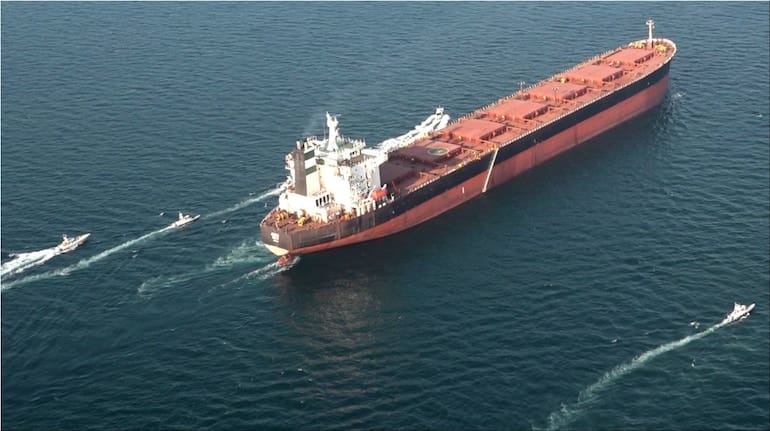
The World's Most Expensive Waterway: Hormuz Transit Costs Reach Historic Highs
As of mid-April 2026, insuring a single vessel passage through the Strait of Hormuz costs between 5% and 10% of a ship's hull value — meaning that a very large crude carrier valued at $100 million now requires roughly $5 million in war risk premiums for one transit. According to Lloyd's List, charterers face quotes of $10 million to $14 million per voyage, figures that would have been unthinkable just two months ago. The Strait of Hormuz has become, by a considerable margin, the most expensive commercial waterway on the planet.
The surge represents a more than 300% increase from early 2026 levels and roughly sixty times the rates that prevailed before the crisis erupted on February 28. Before the coordinated U.S.–Israeli airstrikes on Iran that month, additional war risk premiums for a single Hormuz transit ranged from 0.125% to 0.4% of insured hull value — an already elevated band that reflected pre-existing regional tensions. Within 48 hours of the strikes, premiums leaped fivefold, and major marine insurers moved swiftly to terminate existing coverage altogether, offering replacements only at dramatically repriced rates.
By mid-April, the insurance market shows signs of cautious stabilization following reports of ceasefire discussions and reduced immediate kinetic activity. Shipowners have placed large volumes of requests for cover as they eye a potential resumption of normal transits, producing modest rate corrections. Yet premiums remain vastly elevated compared with 2025 levels, and any renewed military escalation could instantly reverse the fragile moderation.
An Insurance Market in Retreat
The response from the global insurance industry has been swift and severe. The Joint War Committee of the Lloyd's Market Association expanded its "high-risk" designation to encompass the entire Persian Gulf, not merely the strait itself. Major maritime insurers — including syndicates that have underwritten Gulf shipping for decades — suspended or repriced war-risk coverage wholesale. As S&P Global reported in March, marine war insurance for Hormuz effectively "dried up" as the conflict intensified.
This is not a marginal adjustment. The insurance market's retreat represents a fundamental reassessment of risk in a waterway through which approximately one-fifth of the world's petroleum and 20% of global LNG transits daily. When underwriters refuse to price risk at commercially viable levels, they create a de facto blockade that operates alongside the physical one — vessels may be seaworthy and willing, but without insurance, they cannot legally sail.
The World Economic Forum, in an April 2026 analysis, described governments being forced into the role of "insurers of last resort" — a historically rare development that underscores the magnitude of market failure. U.S. President Donald Trump responded by announcing that the U.S. Development Finance Corporation would provide political risk insurance and guarantees for maritime trade through the strait at subsidized rates, with the U.S. military offering convoy escorts through Hormuz if necessary.
Qatar Bears the Heaviest Burden
No nation has been more directly impacted by this crisis than Qatar. As the world's largest LNG exporter, Qatar depends on the Strait of Hormuz as the sole maritime exit for virtually all of its liquefied natural gas shipments. Roughly 20% of global LNG passes through the chokepoint, and nearly all of it originates from Qatar's massive North Field complex.
The damage extends far beyond insurance costs. An Iranian attack on Qatar's Ras Laffan gas facility in early March wiped out approximately 17% of the country's LNG export capacity, with two of Qatar's fourteen LNG trains and one of its two gas-to-liquids facilities sustaining serious damage. QatarEnergy estimates that 12.8 million tonnes of annual LNG production will remain sidelined for three to five years as repairs proceed, at an estimated cost of $20 billion per year in lost revenue.
On March 24, QatarEnergy declared force majeure on several long-term LNG supply contracts, affecting customers in Italy, Belgium, South Korea, and China. The declaration — the first force majeure in QatarEnergy's modern history — sent shockwaves through European and Asian energy markets. Europe, which receives 12% to 14% of its LNG from Qatar, faces the most acute near-term supply gap.
The operational reality was laid bare on April 6, when two Qatari LNG tankers — the Marshall Islands-flagged Rasheeda and the Bahamian-flagged Al Daayen — aborted an attempted crossing of the Strait of Hormuz, dashing hopes of the first LNG shipment out of the Gulf since the war began. The failed transit attempt demonstrated that even with willing vessels and available cargo, the combination of military risk and prohibitive insurance costs creates an effective chokepoint closure.
The Insurance Weapon as Irregular Warfare
A striking dimension of this crisis is how commercial insurance mechanisms have become, in effect, a tool of irregular warfare. As the Irregular Warfare Center noted in a March analysis, the insurance market's risk-pricing logic now functions as a force multiplier — Iran does not need to physically block every vessel when the mere threat of attack renders insurance unaffordable and thus transits commercially unviable.
This dynamic creates a deeply asymmetric situation. Iran's capacity to disrupt Hormuz shipping does not require sustained naval operations; it requires only enough demonstrated willingness to attack that underwriters cannot model acceptable loss ratios. A single missile strike on a tanker reverberates through Lloyd's of London within hours, repricing risk for every vessel in the Gulf.
For Qatar and its Gulf neighbours, this represents a structural vulnerability that transcends any single conflict. Even when ceasefire discussions produce results, the insurance market's memory is long. The Red Sea crisis of 2024–2025, triggered by Houthi attacks, demonstrated that war risk premiums can remain elevated for months or years after active hostilities subside, as underwriters demand a sustained track record of safe passage before adjusting rates downward.
Implications for Doha's Strategic Calculus
Qatar's leadership faces a set of interconnected challenges that will reshape the country's energy strategy for years to come. The immediate priority is restoring Ras Laffan's damaged capacity and negotiating the resumption of LNG exports once transit conditions permit. But the deeper strategic question concerns diversification of export routes.
The crisis has accelerated discussions — long considered theoretical — about alternative pipeline routes that could bypass Hormuz entirely. Qatar's ongoing North Field expansion, which was set to increase LNG capacity to 142 million tonnes per year by 2030, now faces a revised timeline. The expansion remains strategically essential, but its commercial viability depends on reliable access to global shipping lanes at insurable rates.
For global energy markets, the Hormuz insurance crisis illustrates a fundamental truth: energy security is inseparable from maritime security. The most sophisticated LNG infrastructure in the world is only as reliable as the waterway through which its cargoes must pass — and that waterway's accessibility is now determined as much by underwriters in London as by navies in the Gulf. Qatar, which has invested hundreds of billions in becoming the world's indispensable LNG supplier, now confronts the reality that its greatest strategic asset sits behind the world's most expensive toll gate.