Shifting Sands: UAE and Saudi Arabia's Alliances Amid the Israel-Palestine Crisis
Explore how recent events and historical ties are reshaping UAE and Saudi Arabia's alliances in response to the Israel-Palestine crisis.
The alliance between Saudi Arabia and the United Arab Emirates (UAE) is experiencing unprecedented strain amid the ongoing Israel-Palestine crisis, highlighted by Saudi Arabia's airstrike on a UAE military shipment at Mukalla port on December 30, 2022. This aggressive move underscores the deepening rift between the two Gulf powerhouses, traditionally seen as close allies.
Saudi Arabia's decision to launch an airstrike against the UAE marks a significant escalation in their bilateral tensions. The incident at Mukalla port is emblematic of the broader geopolitical shifts occurring in the region, as both nations navigate their roles in the complex dynamics of Middle Eastern conflicts. The airstrike was accompanied by a stern warning from Saudi Arabia, indicating that the UAE's actions were perceived as a direct threat to Saudi interests. This development is part of a broader pattern of military engagements and diplomatic maneuvers that have characterized the Gulf's response to the Israel-Palestine crisis.
In addition to the airstrike, both Saudi Arabia and the UAE have been involved in military actions and diplomatic efforts related to the broader regional conflicts. Since March 2, 2023, there have been reports of attacks on Gulf countries, including Saudi Arabia, by regional actors, further complicating the security landscape. The ongoing dialogue between Saudi Arabia and the Houthi rebels, despite its limited success, also plays a crucial role in the region's stability. The Houthis' repeated attacks on Red Sea shipping lanes in response to the Israel-Hamas conflict add another layer of complexity to the situation.
The recent military actions and diplomatic tensions between Saudi Arabia and the UAE have significant implications for regional stability. These developments not only strain their bilateral relationship but also impact the broader network of alliances in the Gulf. As the crisis unfolds, the responses of these key players will be critical in shaping the future geopolitical landscape of the Middle East.
The historical ties between the United Arab Emirates (UAE), Saudi Arabia, and Palestine are deeply rooted in the broader Arab-Israeli conflict and the quest for Palestinian statehood. Both the UAE and Saudi Arabia have historically supported the Palestinian cause, aligning with the broader Arab consensus that emerged after the 1948 Arab-Israeli war. This support was evident in their backing of various Palestinian factions and their participation in Arab League initiatives aimed at countering Israeli influence in the region.
Past conflicts, such as the 1967 Six-Day War and the 1973 Yom Kippur War, further solidified the UAE and Saudi Arabia's stance against Israel, with both countries participating in oil embargoes and other economic measures to pressure Western nations into supporting Palestinian rights. However, the geopolitical landscape began to shift in the late 20th and early 21st centuries, as regional dynamics and the rise of Iran as a perceived threat led to a reevaluation of alliances.
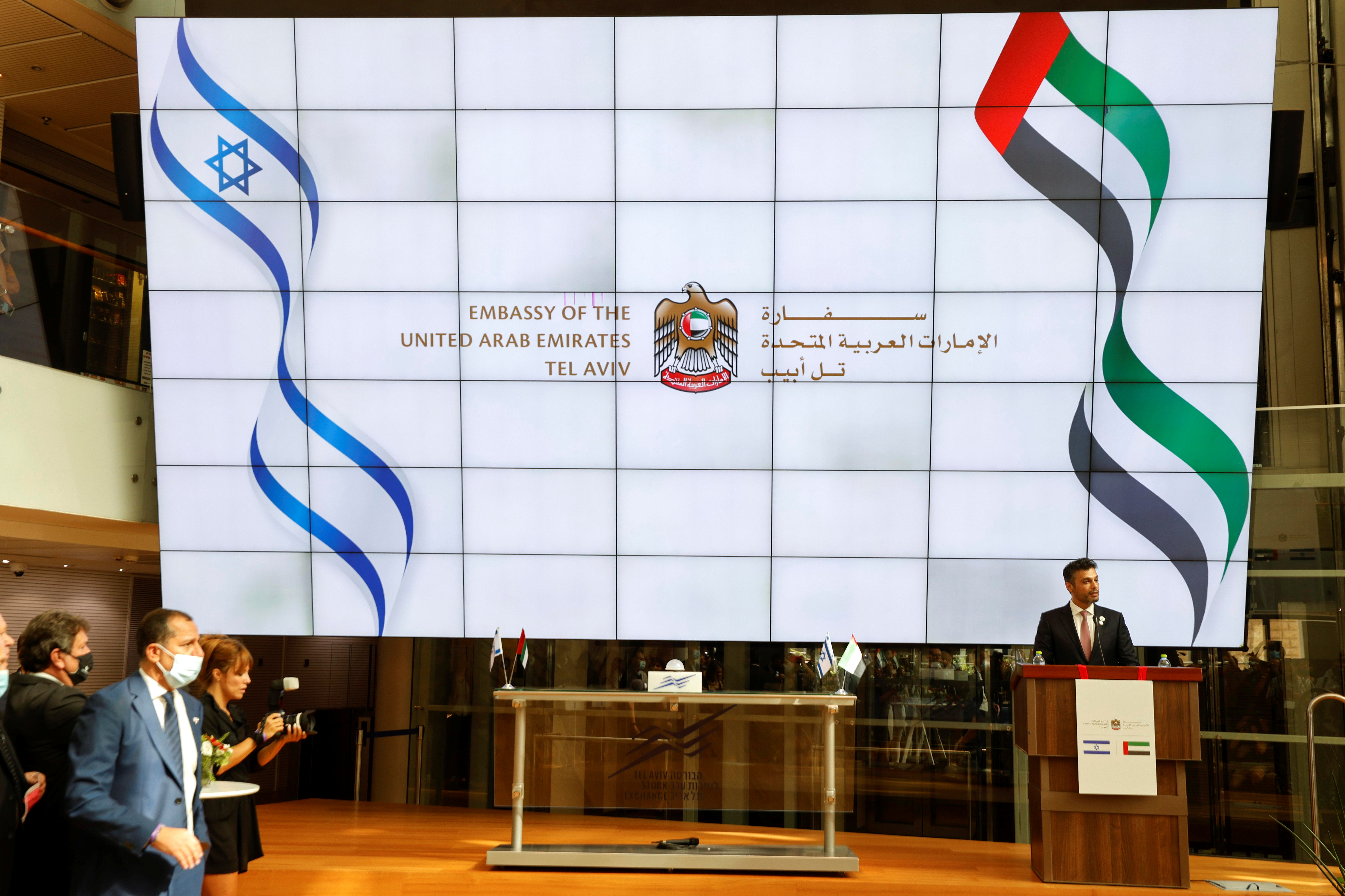
The Abraham Accords, signed in September 2020, marked a significant turning point. These agreements normalized relations between Israel and several Arab states, including the UAE, and were seen as a strategic move to counter Iranian influence. While Saudi Arabia did not formally join the Accords, its tacit approval was evident, reflecting a pragmatic approach to regional security concerns. The Accords have reshaped perceptions and alliances, with the UAE positioning itself as a mediator capable of influencing post-conflict reconstruction efforts in Gaza, as noted by the International Crisis Group.
These historical factors continue to influence current policies, as both the UAE and Saudi Arabia navigate their roles in the evolving Middle Eastern geopolitical landscape. The balance between supporting Palestinian aspirations and addressing broader security concerns remains a delicate one, impacting their diplomatic and military strategies in the region.
In the context of the Israel-Palestine crisis, the foreign policies of the United Arab Emirates and Saudi Arabia are significantly influenced by their respective leaders. In the UAE, President Sheikh Mohammed bin Zayed Al Nahyan plays a pivotal role in shaping the country's diplomatic strategies. Known for his pragmatic approach, Sheikh Mohammed has been instrumental in the UAE's decision to normalize relations with Israel through the Abraham Accords. His leadership reflects a strategic shift towards economic and security cooperation, while maintaining a nuanced stance on the Palestinian issue, advocating for a two-state solution.
In Saudi Arabia, Crown Prince Mohammed bin Salman is the central figure driving foreign policy. His Vision 2030 initiative aims to diversify the Saudi economy and reduce its dependency on oil, which influences his diplomatic engagements. The Crown Prince has expressed a commitment to the Palestinian cause, emphasizing the importance of a fair resolution to the conflict. However, his pragmatic approach is evident in Saudi Arabia's cautious engagement with Israel, balancing traditional support for Palestine with emerging regional security concerns, particularly regarding Iran.
The personal relationship between Sheikh Mohammed and Crown Prince Mohammed bin Salman is characterized by mutual respect and shared strategic interests, yet it also reflects underlying tensions. Their interactions influence diplomatic strategies, as seen in the recent strain over military actions and differing approaches to regional conflicts. While both leaders prioritize stability and economic growth, their individual perspectives on the Israel-Palestine issue and broader Middle Eastern dynamics contribute to the complexity of their alliance. This interplay of personal and political factors continues to shape the diplomatic landscape, affecting how these Gulf states navigate the evolving geopolitical challenges.
The role of external powers, particularly the United States and Iran, is crucial in shaping the responses of Gulf states like the UAE and Saudi Arabia to the Israel-Palestine crisis. The United States has historically been a key ally for both nations, providing military support and diplomatic backing. However, recent shifts in US foreign policy have prompted a reassessment of this reliance. The US-Israeli military campaign against Iran has heightened regional tensions, compelling Gulf states to recalibrate their strategies. The UAE and Saudi Arabia are increasingly seeking to diversify their alliances and reduce dependency on a single superpower, as evidenced by their engagement with China and Russia.
Iran's actions remain a significant concern for both the UAE and Saudi Arabia. The ongoing conflict in Yemen, where Iran-backed Houthi rebels have targeted Saudi interests, underscores the persistent threat posed by Tehran. The Houthis' attacks on ships in the Red Sea in response to Israel's war on Hamas highlight the complex interplay between regional conflicts and the broader geopolitical landscape. This has driven Saudi Arabia and the UAE to bolster their defenses and seek new partnerships to counter Iranian influence.
Global powers are navigating these shifting alliances with caution. While the United States continues to play a dominant role, the involvement of other nations like China and Russia is becoming more pronounced. These countries are leveraging economic and military ties to expand their influence in the Middle East. The UAE and Saudi Arabia's engagement with these global powers reflects a strategic pivot towards a multipolar world order, where regional security and economic interests are balanced against traditional alliances. This evolving dynamic is reshaping the geopolitical landscape, as Gulf states adapt to new realities and seek to assert their influence in a rapidly changing environment.
Public sentiment in the UAE and Saudi Arabia regarding the Israel-Palestine conflict is complex and multifaceted, shaped by historical ties, religious affiliations, and national interests. In Saudi Arabia, there is a strong public support for the Palestinian cause, rooted in shared Arab identity and Islamic solidarity. This sentiment is reflected in the kingdom's official stance, which continues to advocate for a two-state solution and the establishment of a Palestinian state with East Jerusalem as its capital. However, the Saudi leadership's cautious engagement with Israel, driven by regional security concerns, has led to a nuanced public discourse.
In the UAE, the situation is somewhat different. The signing of the Abraham Accords in 2020 marked a significant shift in the UAE's approach to Israel, normalizing relations and fostering economic and technological cooperation. While this move was met with criticism from some segments of the population, the UAE government has actively promoted the benefits of this alliance through state-controlled media, emphasizing economic growth and regional stability. The media plays a crucial role in shaping public perception, often highlighting the pragmatic aspects of foreign policy decisions and downplaying potential controversies.
Domestic politics and civil society also influence foreign policy decisions in both countries. In Saudi Arabia, Crown Prince Mohammed bin Salman's Vision 2030 initiative aims to diversify the economy and reduce dependence on oil, which necessitates stable regional relations and foreign investments. This economic imperative can sometimes lead to foreign policy choices that prioritize strategic alliances over traditional loyalties. Similarly, in the UAE, the leadership's focus on becoming a global hub for trade and innovation drives its foreign policy, balancing traditional support for Palestine with pragmatic engagement with Israel.
Overall, the interplay between public opinion, domestic priorities, and media narratives continues to shape the foreign policy landscape in the UAE and Saudi Arabia, as these nations navigate the complex dynamics of the Israel-Palestine conflict and broader regional challenges.
The current geopolitical landscape in the Gulf region presents several potential outcomes that could significantly impact regional stability. As the UAE and Saudi Arabia navigate their alliances amid the Israel-Palestine crisis, the long-term implications for their foreign relations are profound. The UAE's formal relationship with Israel, solidified through the Abraham Accords in 2020, positions it as a key player in post-war reconstruction efforts in Gaza. This alliance could lead to increased economic cooperation and influence in the region, but it also risks alienating traditional allies who remain staunch supporters of the Palestinian cause.
For Saudi Arabia, the balancing act between supporting the Palestinian cause and engaging with Israel for regional security remains delicate. The kingdom's cautious approach reflects its strategic interests, particularly in countering Iranian influence. However, any overt normalization with Israel could provoke domestic backlash, challenging the leadership's ability to maintain internal stability. The ongoing dialogue between Saudi Arabia and Iran, although fraught with challenges, offers a potential pathway to de-escalate regional tensions, especially concerning the conflict in Yemen.
In the long term, the Gulf region may witness a realignment of alliances, with countries like China and Russia playing more prominent roles. This shift towards a multipolar world order could redefine traditional power dynamics, as Gulf states seek to diversify their partnerships beyond the United States. Scenarios for peace and conflict will largely depend on the ability of regional powers to engage in constructive dialogue and address underlying grievances. The potential for a negotiated settlement in Yemen, coupled with progress towards a two-state solution in the Israel-Palestine conflict, could pave the way for greater regional stability. However, the persistence of unresolved tensions and the risk of miscalculation remain significant challenges. Ultimately, the evolving alliances and strategic calculations of the UAE and Saudi Arabia will be critical determinants of the Gulf's future geopolitical landscape.