QIA 2026: Where Qatar Is Investing Its $500 Billion Sovereign Wealth Fund
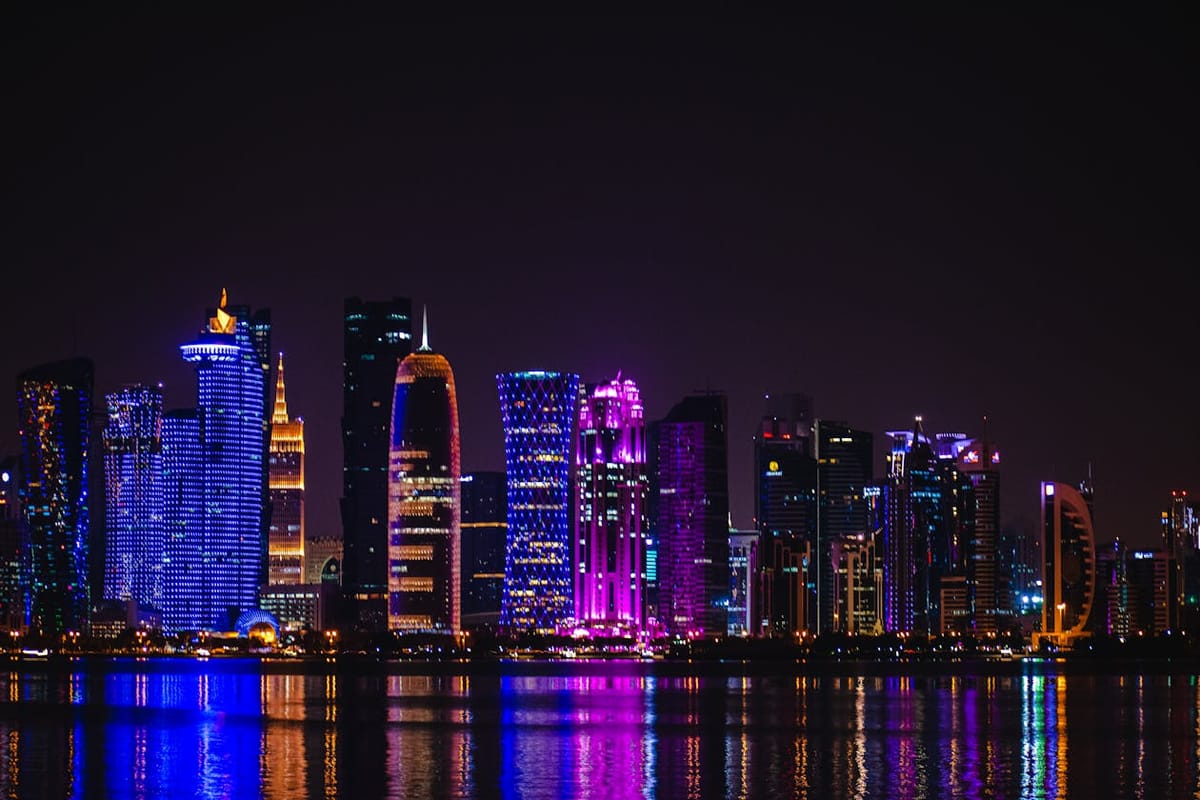
The $580 Billion Pivot
The Qatar Investment Authority is no longer content to be a silent shareholder in Western blue chips. In the first quarter of 2026, the sovereign wealth fund — now estimated at $580 billion in assets under management according to Bloomberg — has signalled a decisive shift in how it deploys the nation's hydrocarbon wealth. From a $25 billion strategic partnership with Goldman Sachs signed in January 2026 to a sweeping restructuring proposal that would separate its domestic and international holdings, QIA is rewriting its playbook at a pace not seen since the fund's founding in 2005.
The transformation reflects a Qatar that views itself not merely as a capital allocator but as an active builder of future industries. Under the leadership of CEO Mansoor Ebrahim Al-Mahmoud, the fund is accelerating into artificial intelligence, digital infrastructure, and emerging market partnerships — all while navigating fiscal pressures that have forced Doha to reconsider the very architecture of its investment apparatus.
The AI Bet: Qatar's Boldest Strategic Wager
No sector captures QIA's 2026 ambitions more clearly than artificial intelligence. In December 2025, Qatar launched Qai, a national AI company established as a direct subsidiary of QIA. Unlike the UAE's G42 or Saudi Arabia's Humain, Qai is not building its own large language models. Instead, the company will evaluate and commercialise existing frontier models, develop AI infrastructure including high-performance computing facilities, and deploy AI systems at scale across key sectors of the Qatari economy.
The launch was immediately followed by a landmark deal: Qai and Brookfield Asset Management announced a $20 billion joint venture to build AI infrastructure in Qatar and select international markets. The partnership — announced at the World Summit AI in Doha on 9 December 2025 — will develop fully integrated AI facilities, positioning Qatar as a regional hub for AI services. For Brookfield, the venture forms the cornerstone of its global AI infrastructure programme, which aims to mobilise up to $100 billion in total investment worldwide.
QIA's AI appetite extends well beyond Qai. The fund has participated in some of the sector's largest fundraising rounds:
- A $13 billion round for Anthropic, the AI safety research company behind Claude
- A $15 billion fundraising for Databricks, the data and AI platform
- A $6 billion round for Elon Musk's xAI
- A February 2026 investment in d-Matrix, a US-based leader in AI inference hardware for next-generation data centres
Alongside these, QIA and Blue Owl Capital launched a $3 billion platform focused on digital infrastructure and data connectivity. The fund now plans to close 25 technology deals annually in 2025 and 2026, nearly doubling its historical pace of 10 to 15 per year.
Wall Street's Most Sought-After Partner
In January 2026, QIA and Goldman Sachs Asset Management signed a Memorandum of Understanding targeting a combined $25 billion commitment across Goldman-managed funds and co-investment opportunities. The partnership prioritises private markets, AI, fintech, digital infrastructure, and private credit — sectors where Goldman sees the most attractive risk-adjusted returns in the current cycle.
The Goldman deal is emblematic of QIA's broader evolution from passive portfolio investor to strategic co-investor. Rather than simply buying stakes in public equities, the fund is increasingly deploying capital through structured partnerships that give it influence over deal selection and portfolio construction. This approach allows Qatar to leverage Wall Street's deal-sourcing networks while retaining strategic control over where its capital flows.
The partnership also reflects a deeper GCC-to-global financial corridor. As Gulf sovereign wealth funds collectively manage trillions of dollars, Western asset managers are competing fiercely for mandates. For Goldman Sachs, the $25 billion target represents one of the largest single sovereign wealth fund relationships in its history.
The Geographic Rebalance: Looking East
Perhaps the most consequential strategic shift underway at QIA is geographic. As of mid-2024, roughly 90 percent of QIA's portfolio was concentrated in Europe, the United States, and Qatar, with just 7 percent allocated to Asia. That ratio is changing fast.
CEO Al-Mahmoud has stated plainly: "A larger share of our investments will be going to the US and places like China and India," even as QIA continues deploying in Europe. The numbers bear this out. In February 2025, Qatar committed $10 billion in investment in India, targeting infrastructure, technology, and manufacturing. Two months later, in April 2025, QIA partnered with Danantara Indonesia Sovereign Fund to launch a $4 billion joint fund focused on downstream industries, renewable energy, healthcare, and technology within Indonesia.
The United States remains QIA's single largest target market. The fund has signalled plans to deploy up to $500 billion in the US over the next decade, with a focus on AI, digitalisation, and infrastructure — sectors where American companies lead globally. QIA's investments in Anthropic, xAI, Databricks, and d-Matrix all fall within this US-focused technology corridor.
This eastward and westward diversification away from Europe represents a calculated response to shifting economic gravity. Asia's growing share of global GDP, combined with the infrastructure boom across India and Southeast Asia, offers QIA higher-growth deployment opportunities than the mature European markets where it built its early portfolio through landmark stakes in companies like Barclays, Volkswagen, and Harrods.
A Radical Overhaul on the Table
In January 2026, Bloomberg reported that QIA executives were weighing a radical restructuring: splitting the fund's overseas holdings from its domestic portfolio by creating a separate entity to house domestic assets worth tens of billions of dollars. The goal would be to develop these domestic holdings into "global champions" — companies that can compete internationally rather than serving solely as instruments of the Qatari economy.
The proposal, if enacted, would represent the most significant structural change to QIA since its founding. Currently, domestic investments account for roughly one-third of QIA's portfolio, with US holdings at 20 percent and the rest of the world at approximately 45 percent. A formal separation would give each portfolio distinct governance, risk management, and return targets — allowing the overseas fund to pursue pure financial returns while the domestic entity focuses on strategic nation-building.
The restructuring discussion is not happening in a vacuum. Analysts have noted that Qatar may face fiscal pressures that could require accelerating some of these changes. The potential need to divest from overseas assets to bridge 2026 budget gaps would carry significant implications for Western markets, where Qatari capital has long served as a foundational source of institutional investment in sectors from real estate to banking.
What the $580 Billion Fund Tells Us About Qatar's Ambitions
Taken together, QIA's 2026 moves paint a portrait of a sovereign wealth fund in deliberate transformation. The fund is simultaneously doubling its technology deal pace, launching national AI champions, rebalancing toward Asia and the United States, restructuring its very organisational architecture, and deepening partnerships with the world's most powerful financial institutions.
This is not diversification for its own sake. Qatar's strategy reflects a clear-eyed assessment that the nation's long-term prosperity depends on positioning itself at the intersection of three megatrends: the global AI infrastructure buildout, the shift of economic weight toward Asia, and the growing importance of sovereign capital in shaping technological development. With LNG revenues providing a robust funding base and a population of just 2.9 million, Qatar can afford to make concentrated, high-conviction bets that larger nations cannot.
As Emir Sheikh Tamim bin Hamad Al Thani continues to champion Qatar's role as a diplomatic and economic bridge between East and West — evident in Doha's ongoing mediation efforts and its deepening ties with both Washington and Beijing — QIA serves as the financial expression of that strategic vision. The fund's $580 billion is not simply wealth to be preserved. It is capital to be deployed in service of a small nation's outsized ambitions.