Qatar's Crucial Role in Humanitarian Aid to Gaza Amidst Ongoing Conflict
Exploring Qatar's involvement in Gaza's humanitarian aid and its geopolitical implications.
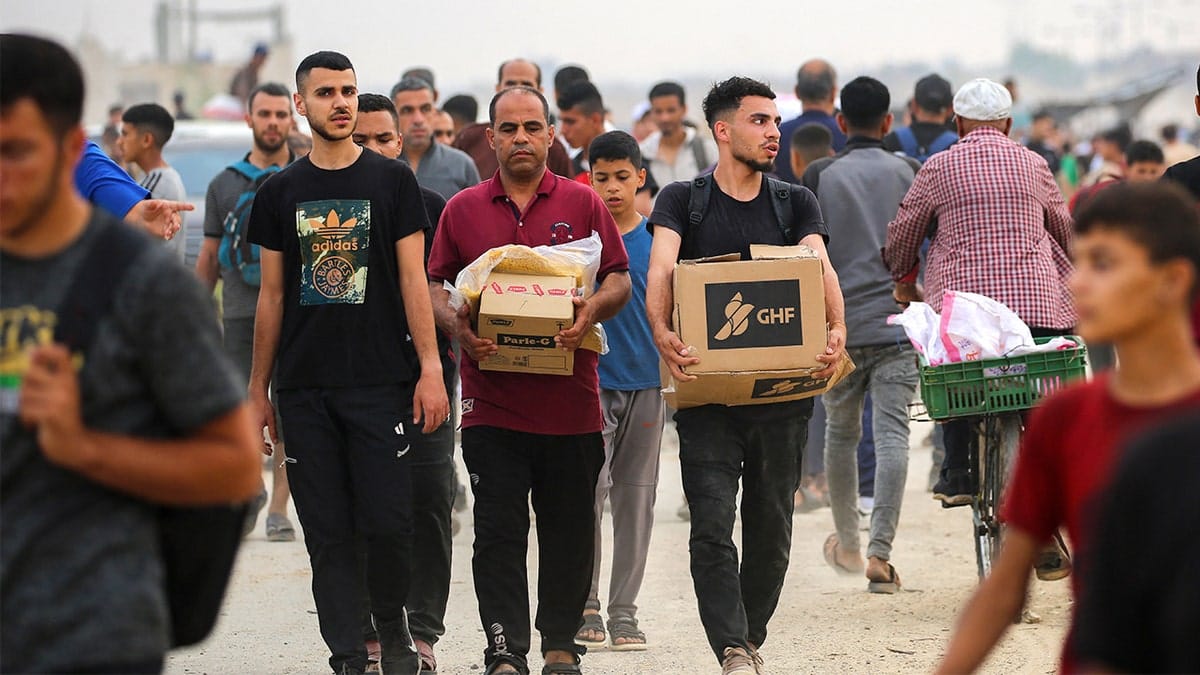
Qatar has intensified its humanitarian aid efforts to Gaza amidst the ongoing conflict, with significant actions taken in recent months. On September 2023, Qatar announced a substantial aid package amounting to $500 million, aimed at alleviating the humanitarian crisis exacerbated by the continuous hostilities in the region. This financial commitment underscores Qatar's ongoing dedication to supporting the Palestinian people through both direct aid and infrastructure development.
The Qatari government has employed a multifaceted approach to deliver this aid, coordinating with international organizations and local authorities to ensure effective distribution. The aid package includes funding for essential services such as electricity, water, and healthcare, as well as the reconstruction of homes and public buildings damaged during the conflict. Notably, Qatar has facilitated the delivery of fuel to Gaza's power plant, addressing the chronic electricity shortages that have plagued the region.
International responses to Qatar's humanitarian initiatives have been mixed. The United Nations has praised Qatar's efforts, acknowledging the critical role such aid plays in mitigating the dire living conditions faced by Gazans. However, some regional actors have expressed skepticism, questioning the political motivations behind Qatar's actions. Despite this, Qatar's contributions have been largely welcomed by the international community, with many viewing them as a necessary intervention in a protracted humanitarian crisis.
Qatar's commitment to Gaza is not a recent development, but the scale and urgency of its current aid efforts reflect the escalating needs on the ground. As the conflict continues, Qatar's role in providing humanitarian assistance remains a focal point in discussions about the future stability and reconstruction of Gaza. This ongoing support highlights Qatar's strategic positioning as a key player in regional humanitarian efforts, amidst a complex geopolitical landscape.
Qatar's engagement with Gaza has evolved significantly over the years, shaped by both regional dynamics and its own foreign policy objectives. Historically, Qatar has maintained a unique position in the Middle East, often acting as a mediator in conflicts and a supporter of various political factions. Since the early 2000s, Qatar has been actively involved in Gaza, providing both humanitarian aid and political support. This involvement became more pronounced following the 2006 Palestinian legislative elections, when Hamas won a majority and subsequently took control of Gaza. Unlike many other states, Qatar maintained open channels of communication with Hamas, facilitating dialogue and aid delivery.
In 2012, Qatar's then-Emir, Sheikh Hamad bin Khalifa Al Thani, made a landmark visit to Gaza, marking the first visit by a head of state since Hamas assumed control. This visit underscored Qatar's willingness to engage directly with Gaza's leadership and its commitment to supporting reconstruction efforts. Over the years, Qatar has pledged billions in aid to Gaza, funding projects ranging from infrastructure development to healthcare and education, often working in coordination with international organizations to ensure effective implementation.
Regional dynamics have also influenced Qatar's role in Gaza. The blockade imposed by Israel and Egypt, coupled with the broader geopolitical tensions in the Gulf, have positioned Qatar as a crucial lifeline for Gaza. Despite facing criticism from some neighboring countries, Qatar has continued its support, leveraging its diplomatic relationships to facilitate aid delivery. This steadfast commitment has allowed Qatar to bolster its regional influence, positioning itself as a key player in Middle Eastern diplomacy and humanitarian efforts. As the situation in Gaza remains volatile, Qatar's historical engagement and ongoing support continue to be pivotal in addressing the humanitarian needs of the Palestinian people.
The humanitarian aid landscape in Gaza is shaped by a multitude of actors, each playing a distinct role in addressing the needs of the civilian population. Among the major organizations involved are the United Nations Relief and Works Agency for Palestine Refugees in the Near East (UNRWA), the International Committee of the Red Cross (ICRC), and various non-governmental organizations (NGOs) such as Oxfam and Médecins Sans Frontières. These entities work alongside local groups to provide essential services, including food distribution, medical care, and infrastructure repair.
Local and international NGOs have generally viewed Qatar's involvement in Gaza's humanitarian efforts positively. They recognize Qatar's substantial financial contributions and its ability to facilitate aid delivery, particularly in light of the restrictions imposed by the Israeli and Egyptian blockades. However, some NGOs express concerns about the potential politicization of aid, urging that humanitarian assistance remain neutral and focused solely on alleviating human suffering.
Reactions from Palestinian authorities, including the Palestinian Authority (PA) and Hamas, have been varied. The PA has occasionally criticized Qatar's direct engagement with Hamas, viewing it as undermining their own governance and legitimacy. Conversely, Hamas has welcomed Qatar's support, which has been crucial in sustaining Gaza's economy and infrastructure amidst ongoing conflict and isolation. This support has included funding for salaries, fuel, and reconstruction projects, which are vital for the enclave's survival.
Regional players such as Egypt and Israel have had mixed reactions to Qatar's role. While they acknowledge the necessity of humanitarian aid, there are underlying concerns about Qatar's influence in the region and its relationship with Hamas. Despite these tensions, Qatar's contributions remain indispensable, highlighting its strategic importance in the broader geopolitical and humanitarian context of the Middle East.
The provision of humanitarian aid to Gaza is governed by a complex array of international legal frameworks and United Nations resolutions, which aim to ensure that aid reaches those in need while maintaining neutrality and impartiality. Key among these is the Fourth Geneva Convention of 1949, which outlines the obligations of occupying powers to ensure the welfare of civilian populations. This convention is particularly relevant given the ongoing Israeli occupation of Palestinian territories, including Gaza.
UN Security Council Resolution 242, adopted in 1967, calls for the withdrawal of Israeli armed forces from territories occupied in the conflict and emphasizes the need for a just settlement of the refugee problem. While not directly focused on humanitarian aid, it provides a backdrop for international efforts to address the humanitarian situation in Gaza. Additionally, UN General Assembly resolutions have repeatedly highlighted the need for unimpeded humanitarian access to Gaza, urging all parties to facilitate the delivery of aid.
Qatar has navigated these legal frameworks by ensuring that its aid efforts align with international standards. The country has worked closely with international organizations to distribute aid, thereby enhancing transparency and accountability. However, Qatar faces challenges in this arena, particularly due to the political complexities of the region. The Israeli and Egyptian blockades impose significant logistical hurdles, complicating the delivery of aid and requiring diplomatic negotiations to secure passage.
Despite these challenges, Qatar's commitment to adhering to international legal standards remains steadfast. By coordinating with entities such as the UN and the ICRC, Qatar ensures that its humanitarian efforts are both effective and compliant with global norms. This approach not only facilitates the delivery of essential aid but also reinforces Qatar's position as a responsible actor in the international community.
The ongoing conflict in Gaza has resulted in severe human rights implications, with numerous reports from non-governmental organizations highlighting the dire conditions faced by civilians. According to Human Rights Watch and Amnesty International, the blockade imposed by Israel and Egypt has exacerbated the humanitarian crisis, severely restricting the movement of people and goods. This has led to shortages of essential supplies, including food, medicine, and fuel, further deteriorating living conditions for the 2 million residents of Gaza.
Amidst the conflict, reports have documented widespread human rights violations, including the targeting of civilian infrastructure and the use of excessive force. The United Nations Office for the Coordination of Humanitarian Affairs (OCHA) has reported that thousands of homes have been destroyed or severely damaged, displacing tens of thousands of people. The impact on children has been particularly devastating, with many suffering from trauma and lacking access to basic education and healthcare services.
In response to these human rights concerns, Qatar has tailored its aid strategy to address the immediate needs of the civilian population while advocating for broader structural changes. Qatar has focused on funding projects that rebuild essential infrastructure, such as hospitals and schools, and has provided financial assistance to ensure the continuity of basic services. Additionally, Qatar has emphasized the importance of protecting civilian lives and has called for the lifting of the blockade to allow for the free flow of humanitarian aid.
Qatar's approach underscores its commitment to upholding human rights and international humanitarian law. By working with international partners and NGOs, Qatar aims to mitigate the impact of the conflict on civilians and promote long-term stability in the region. This strategy not only addresses immediate humanitarian needs but also seeks to lay the groundwork for a more sustainable and peaceful future for Gaza.
Qatar's humanitarian aid efforts in Gaza have significant economic and strategic implications, both for the nation itself and the broader Gulf region. By positioning itself as a key provider of aid, Qatar enhances its geopolitical standing, projecting an image of a benevolent and influential regional power. This role allows Qatar to exercise soft power, fostering goodwill not only among Palestinians but also within the international community, which values humanitarian contributions to conflict zones.
Economically, Qatar's aid initiatives involve substantial financial commitments, which can be seen as both a benefit and a risk. On one hand, these efforts showcase Qatar's economic capacity and willingness to invest in regional stability, potentially attracting international partnerships and investments. On the other hand, the financial burden of sustained aid efforts could strain Qatar's resources, particularly if the conflict persists without resolution. However, by aligning its aid strategy with international organizations, Qatar mitigates these risks through shared responsibilities and funding.
Strategically, Qatar's aid to Gaza serves to bolster its influence within the Gulf Cooperation Council (GCC) and the wider Middle East. By taking a leading role in humanitarian efforts, Qatar distinguishes itself from other regional actors, some of whom may be less engaged in such initiatives. This distinction can enhance Qatar's diplomatic leverage, allowing it to navigate complex regional dynamics more effectively. Furthermore, Qatar's active involvement in Gaza underscores its commitment to regional peace and stability, reinforcing its reputation as a proactive and responsible actor on the global stage.
Qatar's humanitarian role in Gaza has elicited varied reactions from regional and international actors. Among neighboring Gulf states, responses have been mixed. While some countries within the Gulf Cooperation Council (GCC) view Qatar's efforts as a positive contribution to regional stability, others remain skeptical, perceiving Qatar's actions as an attempt to assert influence in a geopolitically sensitive area. In the broader Arab world, Qatar's aid initiatives are generally welcomed, particularly by countries that support the Palestinian cause and seek to alleviate the humanitarian crisis in Gaza.
Internationally, Qatar's involvement has been largely praised by humanitarian organizations and Western governments, who recognize the critical need for aid in the region. The United Nations and various NGOs have acknowledged Qatar's contributions to rebuilding infrastructure and providing essential services, viewing these efforts as vital to addressing the immediate needs of Gaza's population. However, some international actors remain cautious, emphasizing the importance of ensuring that aid reaches its intended recipients without being diverted for political purposes.
The implications of these reactions for future diplomatic relations are significant. Qatar's humanitarian role could enhance its diplomatic leverage, allowing it to engage more effectively with both regional and global partners. However, the ongoing conflict in Gaza and the complex geopolitical landscape of the Middle East mean that Qatar must navigate these relationships carefully. Future scenarios could involve increased collaboration with international organizations to ensure the effective delivery of aid, or potential tensions with regional actors who may view Qatar's involvement as a challenge to their own influence.
Looking ahead, the key factors to watch include the evolution of Qatar's aid strategy, the response of regional actors to its initiatives, and the broader geopolitical shifts in the Middle East. As Qatar continues to position itself as a leader in humanitarian efforts, its ability to balance these dynamics will be crucial in shaping its role in the region and its relationships on the global stage.