Qatar Tourism 2026: What Four Years After the World Cup Actually Looks Like
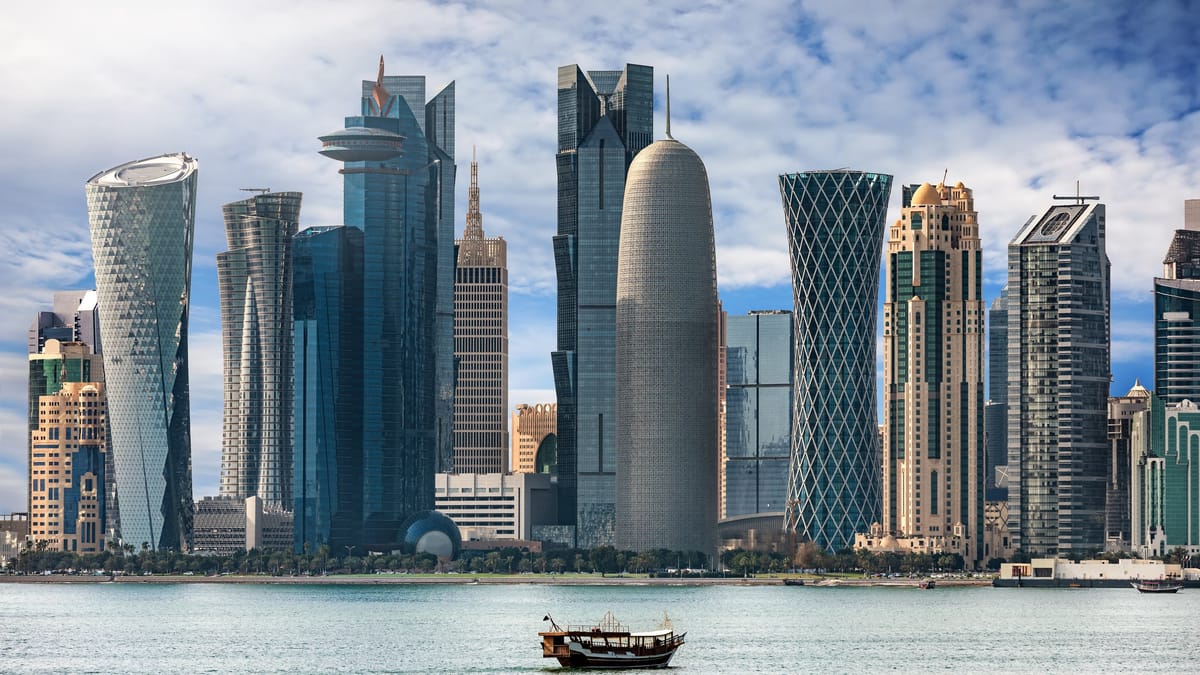
From Tournament Host to Tourism Powerhouse
When the final whistle blew at Lusail Stadium in December 2022, sceptics were quick to write the obituary. Qatar had thrown the most expensive World Cup in history, they said, and it would all gather dust. Four years later, the numbers tell a starkly different story. Qatar welcomed 5.1 million international visitors in 2025, a record, with tourism now contributing QR 55 billion — roughly $15.1 billion — to national GDP, or 8% of total economic output. Hotel occupancy climbed to 71.3%, room nights sold exceeded 10.8 million, and the cruise terminal at Old Doha Port is in the middle of its busiest season ever. Whatever the doubters predicted, it has not come to pass.
The Numbers Behind the Momentum
The growth trajectory since the World Cup has been remarkably consistent. In 2024, international arrivals surged 25% year-on-year to reach 5 million, with in-destination spending totalling nearly QR 40 billion. The 2025 figure of 5.1 million represented a further 3.7% annual climb — less dramatic, perhaps, but steadier, the kind of organic growth that signals a maturing destination rather than a one-off spike.
Hotel revenues jumped 21% in Q2 2025 alone, according to ValuStrat. The GCC continues to supply the largest share of visitors at 35%, followed by Europe at 25%. Of total arrivals, 61% came by air, 32% by land, and 7% by sea — a breakdown that underscores how Qatar's land border with Saudi Arabia and its growing cruise infrastructure are diversifying entry points beyond Hamad International Airport.
The government's Third National Development Strategy 2024–2030 has set the bar higher still: 6 to 7 million annual visitors and a 12% GDP contribution from tourism by 2030. Current projections suggest a compound annual growth rate of 3.25% through 2029, putting 6.1 million arrivals within reach by the end of the decade.
Doha as GCC Tourism Capital
In a decision announced on 31 December 2025 by the GCC General Secretariat, Doha was designated as the GCC Tourism Capital for 2026, taking over from Al Ain in the UAE. The title, awarded on the basis of cultural authenticity, sustainability, and innovation, comes with a packed calendar meant to justify it.
February opened with Art Basel Qatar debuting at Doha's M7 and the Design District from 5–7 February — the first Art Basel fair in the Middle East. The same month brought the Qatar Masters Golf Championship and the Qatar TotalEnergies Open tennis tournament. In March, Lusail Stadium hosted the 2026 Finalissima, pitting reigning continental champions Argentina against Spain in a match that drew global attention back to a venue the world last watched during the 2022 final. Later in the year, Doha will stage the Doha Film Festival and Qatar International Art Festival in November, while the FIBA Basketball World Cup 2027 qualifier windows are already underway on Qatari soil.
The designation is more than ceremonial. It signals a deliberate shift: Qatar is no longer marketing itself as a stopover destination or a place you visit for a single event. It wants to be the Gulf's cultural anchor.
Infrastructure That Outlasted the Tournament
The post-World Cup narrative in previous host nations — South Africa, Brazil, Russia — often centred on white elephants. Qatar's approach has been to repurpose aggressively. Lusail Stadium hosts marquee fixtures. The metro system, built for the tournament, now carries daily commuters and tourists to Souq Waqif, the National Museum, and the Katara Cultural Village.
New additions are coming online. Dadu, the Children's Museum of Qatar, is set to open in 2026, featuring interactive galleries and activity spaces designed to attract family tourism — a segment Qatar has specifically targeted. The Qatar Auto Museum is also scheduled to open its doors this year. Further out, the Lusail Museum, designed by Herzog & de Meuron, will house the world's largest collection of Orientalist paintings and photography when it opens in 2029, followed by the Art Mill Museum in 2030.
On the hospitality front, a QR 20 billion coastal resort development at Simaisma is underway, while Hamad International Airport continues its expansion. The strategy has shifted from capacity-building to curation — the Gulf Times reported in early 2026 that Qatar's hospitality sector will now focus on selective, high-quality projects rather than broad expansion, a deliberate pivot away from the hotel glut that plagued other Gulf states.
The Cruise Gamble That Paid Off
One of the less-discussed success stories is maritime tourism. The 2025–2026 cruise season, running from November through May, is on track to welcome a record 73 cruise ship calls at the Old Doha Port terminal — up significantly from previous seasons. MSC Euribia alone has 22 scheduled stops. Celestyal Cruises has made Doha its home port, offering 7-night voyages to the UAE and Oman, while AROYA Cruises, the Saudi-backed luxury line, is making its maiden visit.
The port's location is its selling point: minutes from the National Museum, Souq Waqif, and the Corniche. Unlike purpose-built cruise terminals in the middle of nowhere, Doha's facility drops passengers into the cultural heart of the city. With 40 partial turnaround calls and 15 full turnaround calls scheduled, Qatar is positioning itself not just as a port of call but as a cruise hub — a distinction that carries significantly higher economic value per visitor.
The Gulf Schengen and What Comes Next
Perhaps the most transformative development on the horizon is the GCC Unified Tourist Visa, a Schengen-style single visa covering Qatar, Saudi Arabia, the UAE, Bahrain, Kuwait, and Oman. Originally planned for 2025, the initiative was delayed as the six nations worked to align security frameworks and harmonise immigration systems. The pilot phase is now expected in Q4 2026, with full rollout to follow.
For Qatar, the unified visa could be a force multiplier. Visitors arriving in Dubai or Riyadh could seamlessly extend their trip to Doha without additional paperwork — and vice versa. The visa is expected to boost multi-country itineraries across the Gulf, and Qatar's positioning as a cultural and sporting hub gives it a strong draw within that circuit. Combined with expanded air connectivity and the 2027 FIBA Basketball World Cup — the first in the Arab world — Qatar stands to capture a significant share of the region's growing inbound demand.
The Olympic Question
Behind all of this sits a larger ambition. In July 2025, Qatar formally entered the IOC's Dialogue Phase for the 2036 Summer Olympic and Paralympic Games, competing against bids from India, Indonesia, Turkey, and Chile. Qatar says it already has 95% of the required sports infrastructure in place. Prime Minister Sheikh Mohammed bin Abdulrahman Al Thani has framed the bid as a reflection of Qatar's global standing in sport.
In February 2026, the IOC confirmed that the selection process for 2036 would feature greater transparency than the controversial fast-track decision that awarded the 2032 Games to Brisbane. For Qatar, which would become the first Middle East and North Africa nation to host the Olympics, the tourism infrastructure built since the World Cup is central to the pitch. The hotels, the metro, the stadiums, the cruise terminal, the museums — all of it amounts to a readymade argument that the country can deliver.
Whether or not the Olympic bid succeeds, the trajectory is clear. Four years after the World Cup, Qatar has not returned to obscurity. It has leveraged a three-week football tournament into a structural transformation of its economy — one that, by the government's own targets, is still only two-thirds of the way to where it intends to go.