Qatar LNG Fleet 2026: How Doha Controls a Quarter of Global Gas Shipments
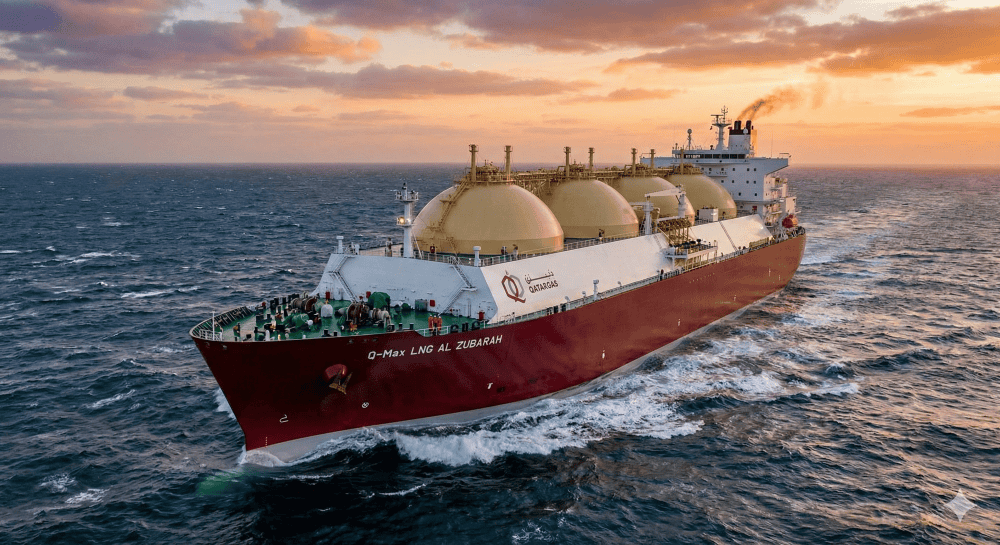
The Fleet That Powers a Fifth of the World's Gas
Before the first Iranian missile arced toward Ras Laffan Industrial City on 18 March 2026, Qatar sat at the apex of a global energy architecture that no other nation could replicate. With 14 liquefied natural gas trains producing 77 million tonnes per annum, the tiny Gulf state exported roughly 20 percent of the world's LNG — and was on course to nearly double that figure by the decade's end. Its state-owned shipping arm, Nakilat, commanded the world's largest LNG fleet: 72 vessels with a combined carrying capacity exceeding 9 million cubic meters, representing approximately 12 percent of global LNG shipping capacity. A new tanker was rolling off shipyard docks every three weeks.
That dominance was not an accident. It was the product of a decades-long strategy by QatarEnergy and the Qatari state to control not just the gas beneath the North Field — the largest non-associated natural gas reservoir on Earth — but the entire logistics chain that moves it from wellhead to consumer terminal in Tokyo, Shanghai, Milan, and Seoul. Today, with Ras Laffan partially crippled and the Strait of Hormuz in crisis, the world is learning exactly how much of its energy security rested on Doha's shoulders.
128 Ships and a $30 Billion Bet
QatarEnergy CEO Saad Sherida Al-Kaabi called it the biggest shipbuilding programme in the LNG industry's history — and the numbers justify the claim. As of early 2026, QatarEnergy had ordered 128 new LNG carriers, of which 38 had been delivered. The fleet includes 104 conventional-size vessels being built simultaneously at shipyards in China and South Korea, alongside 24 QC-Max carriers — each with a capacity of approximately 271,000 cubic meters, making them the largest LNG ships ever constructed.
Nakilat signed long-term charter agreements for 25 conventional vessels and nine QC-Max class carriers with QatarEnergy in 2024 alone. Additional orders placed with Hyundai Samho Heavy Industries for two 174,000-cubic-meter LNG carriers and four LPG/ammonia carriers are scheduled for delivery through 2027. Upon completion, Nakilat's fleet will swell to 112 ships — a floating empire purpose-built to carry the output of Qatar's North Field expansion projects and its stake in the Golden Pass LNG export terminal in Texas.
The expansion was designed to support a singular ambition: pushing Qatar's LNG production from 77 million tonnes to 142 million tonnes per annum by 2030, which would give Doha roughly a quarter of the global market.
North Field: The Crown Jewel Under Construction
The North Field expansion unfolds in two phases. North Field East, the first and larger stage, involves four new 8-million-tonne-per-annum mega trains built by a consortium of Japan's Chiyoda Corporation and France's Technip Energies, along with a carbon capture facility, gas treatment infrastructure, and helium extraction units. The target: lift total capacity to 110 million tonnes by late 2026. North Field South, the second phase, would add another 16 million tonnes to reach 126 million tonnes by 2027.
By February 2026, Bloomberg reported that QatarEnergy had pushed the start of the first NFE train to end-2026. The first of the mega trains — massive cooling units that convert natural gas into liquid form for maritime transport — was reportedly ready. Then the war came.
When Missiles Struck the Heart of Global Gas
On 28 February 2026, the United States and Israel launched coordinated airstrikes against Iran under Operation Epic Fury. Iran's retaliation was swift and broad, targeting US military bases across the Gulf and civilian infrastructure in multiple states. Qatar, home to the largest American military installation in the Middle East, Al Udeid Air Base, found itself in the crossfire.
On 2 March, QatarEnergy announced it had ceased all LNG production at both Ras Laffan Industrial City and Mesaieed Industrial City. The Islamic Revolutionary Guard Corps had effectively closed the Strait of Hormuz, through which roughly one-fifth of global LNG trade flows. Tanker traffic plummeted by approximately 70 percent in the first week. Qatar, which typically loaded 18 to 20 LNG carriers per week, managed just seven in the week ending 6 March.
The damage escalated on 18 and 19 March, when Iranian missiles struck Ras Laffan directly, causing what QatarEnergy described as "extensive damage" to LNG Trains 4 and 6 and the Pearl Gas-to-Liquids facility. In a statement posted on 19 March, Minister Al-Kaabi quantified the blow: 17 percent of Qatar's LNG export capacity destroyed, 12.8 million tonnes per annum knocked offline, and an estimated $20 billion in annual revenue lost. Repairs, he said, would take three to five years — and could not begin until hostilities ceased.
Force Majeure and the Global Scramble
The cascade through global energy markets was immediate and severe. European natural gas futures surged roughly 30 percent. Brent crude spiked more than 7 percent to above $111 per barrel on 19 March, briefly touching $119 before Israeli statements about reopening Hormuz brought partial relief. Daily LNG tanker freight rates jumped more than 40 percent.
On 11 March, Shell — the world's largest LNG trader, which lifts approximately 6.8 million tonnes per annum from Qatar — declared force majeure on its Qatari contracts. TotalEnergies, which takes roughly 5.2 million tonnes annually, followed suit. Both notified downstream buyers that deliveries from April onward would be disrupted. QatarEnergy itself faces potential force majeure declarations on long-term contracts serving Italy, Belgium, South Korea, and China — commitments that could remain unfulfilled for up to five years.
The disruption struck at a particularly sensitive moment. More than 80 percent of Qatar's LNG flows to Asian markets, and several landmark deals had been signed in the preceding months: Japan's largest utility secured a 27-year supply agreement at the LNG 2026 conference in Doha, while India inked a 17-year deal for up to 1 million tonnes per annum in October 2025. European buyers, who had grown increasingly dependent on Qatari LNG after severing Russian pipeline gas, found themselves confronting the fragility of their energy diversification strategy.
The Collateral Damage Beyond Gas
LNG was not the only casualty. The outage at Trains 4 and 6 carries associated losses across Qatar's hydrocarbon product chain:
- Condensates: 18.6 million barrels lost annually — roughly 24 percent of Qatar's condensate exports
- LPG: 1.28 million tonnes — 13 percent of exports
- Naphtha: 594,000 tonnes — 6 percent of exports
- Helium: 309.54 million cubic feet — 14 percent of exports, significant given Qatar's position as the world's second-largest helium producer
The Pearl GTL facility, one of only two gas-to-liquids plants in the world, is expected to remain offline for a minimum of one year. Morgan Stanley, which had previously predicted a global LNG surplus of up to 6 million tonnes in 2026, revised its forecast to remove approximately 1 million tonnes from supply estimates and pushed its projection for first shipments from the North Field expansion to the first quarter of 2027.
What Qatar's Crisis Reveals About Energy Security
The March 2026 crisis has exposed a structural vulnerability in global energy markets that policymakers had long acknowledged but never adequately addressed. Qatar's Ras Laffan complex is the single largest concentration of LNG production capacity on Earth, and the Strait of Hormuz is a chokepoint with no alternative. When both were compromised simultaneously, no amount of spot-market flexibility could compensate.
Spain's call this week for the opening of the Strait of Hormuz and the British Prime Minister's emergency cabinet meeting on the conflict's economic impact underscore how rapidly a regional military escalation translates into a continental energy emergency. The United States, which has positioned itself as an alternative LNG supplier, cannot replace Qatar's volumes overnight — US Gulf Coast export terminals are running near capacity, and new projects require years of construction.
Qatar's 128-ship fleet, its North Field mega trains, its web of 27-year contracts — all of it was built to make Doha indispensable to global energy. That strategy succeeded beyond any projection. The question now facing energy ministers from Brussels to Beijing is not whether Qatar controls a quarter of global gas shipments, but what happens to the world economy when that quarter is taken off the board.