Qatar LNG Fleet 2026: How Doha Controls a Quarter of Global Gas Shipments
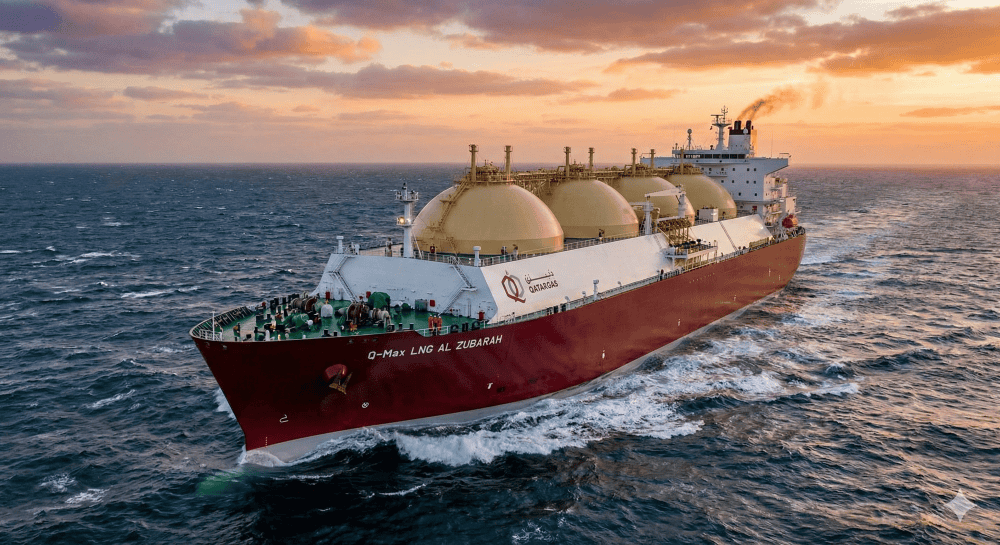
The Strait Under Siege — and Qatar Keeps Delivering
Three container ships reversed course from the Strait of Hormuz this week after warnings from the Islamic Revolutionary Guard Corps, a stark reminder that the world's most critical energy chokepoint remains a flashpoint. Yet even as commercial vessels hesitate, Qatar's LNG carriers continue their methodical rotations across oceans — a testament to Doha's decades-long strategy of building not just gas capacity, but the ships to move it independently of any single maritime corridor or geopolitical crisis.
The seizure of Kharg Island, widely interpreted as a strategic strike against Iran's crude oil exports, has sent shockwaves through global energy markets. Fuel queues in Derby, disrupted garment exports from Bangladesh, and Japan's emergency decision to temporarily lift restrictions on coal-fired power plants all point to one reality: the world is short on energy, and the countries that can deliver it reliably hold extraordinary leverage. No country is better positioned in this moment than Qatar.
A Floating Empire Built Over a Decade
Qatar does not merely produce liquefied natural gas — it commands the logistics chain that moves it from wellhead to regasification terminal. QatarEnergy controls one of the largest dedicated LNG shipping fleets on Earth, a portfolio that expanded dramatically after Doha committed to ordering more than 100 new LNG carriers from South Korean and Chinese shipyards beginning in 2022. Those vessels, many of them the next-generation QC-Max design capable of carrying 271,000 cubic metres of LNG per voyage, have been entering service in waves timed to coincide with the North Field Expansion.
The result is a fleet that gives Qatar something few energy producers possess: end-to-end control. While rival producers must negotiate charter rates on a volatile spot market, Doha's owned and long-term chartered tonnage allows it to guarantee delivery schedules to buyers in Tokyo, Seoul, Beijing, and London regardless of freight market disruptions. In a crisis like the current one, that control translates directly into strategic influence.
North Field Expansion Arrives at the Right Moment
Qatar's North Field — the largest non-associated natural gas reservoir on the planet, stretching beneath the Persian Gulf waters it shares with Iran's South Pars formation — has been the foundation of Doha's wealth for a generation. But the expansion programme announced in the early 2020s represented a bet of historic proportions: raise production capacity from roughly 77 million tonnes per annum to 126 MTPA by 2027, with an eventual target of 142 MTPA.
That bet is now paying off ahead of the most severe energy supply disruption since the 1970s. With Iran's own export infrastructure under direct military pressure and the Strait of Hormuz facing active naval confrontation, buyers who once diversified between Qatari and Iranian gas no longer have that luxury. Japan's decision to restart coal plants — a politically painful reversal for a country that had committed to phasing them out — underscores how desperately Asian importers need every available molecule of LNG. Qatar is the supplier with both the reserves and the vessels to fill the gap.
Asia's Scramble and Qatar's Long-Term Contracts
The current crisis validates a commercial strategy that some analysts once questioned. Over the past three years, QatarEnergy locked in a series of 27-year supply agreements with buyers across Asia and Europe — contracts of a duration not seen in the LNG industry for decades. At the time, critics argued that such long commitments limited Qatar's ability to profit from spot market spikes. Today, those same contracts look like anchors of stability for importing nations facing panic-driven prices.
Japan and South Korea, which together consume roughly a quarter of global LNG imports, have both leaned heavily on Qatari supply. With shipments through the Strait of Hormuz now carrying heightened risk, Qatar's ability to route cargoes via alternative paths — and its diplomatic standing as a mediator rather than a combatant — makes Doha the most dependable gas supplier in the market. China, India, and Bangladesh, whose garment industry is already reeling from war-related export disruptions, are similarly dependent on stable LNG flows to keep power grids and factories running.
Europe Remembers the Lesson of 2022
European buyers need no reminder of what happens when a major gas supplier disappears from the market. The continent's painful weaning off Russian pipeline gas after 2022 drove it directly into the arms of LNG exporters — and Qatar was the supplier with the scale and willingness to commit. Doha signed landmark supply deals with Germany, France, Italy, and the United Kingdom, ensuring that European terminals would receive steady Qatari cargoes for decades.
Now, with a shooting war threatening to choke off not just Iranian crude but potentially broader Gulf shipping, Europe's investment in Qatari relationships is being tested in real time. Early indications suggest the system is holding. Qatar's fleet depth means it can absorb longer routing around conflict zones without immediately cutting deliveries — a buffer that pipeline-dependent suppliers simply cannot offer. For European energy ministers watching the Strait of Hormuz crisis unfold, every Qatari LNG tanker that docks safely at a European terminal is a vindication of the diversification strategy they adopted after the Russian shock.
Doha's Diplomatic Leverage Grows With Every Cargo
Energy has always been Qatar's primary instrument of foreign policy, but the current moment elevates it to something closer to a security guarantee. When Sheikh Joaan bin Hamad offers condolences to Turkey's defence minister, as reported this week, the gesture carries weight not merely as royal protocol but as a signal between an energy superpower and a NATO member navigating the same regional crisis. Qatar's relationships with both Western capitals and regional powers give it a unique position: it can talk to Washington about sanctions enforcement and to Ankara about transit security in the same week, backed by the implicit leverage of controlling a quarter of the world's LNG shipments.
The US Ambassador to the UN's criticism of Tehran and defence of sanctions committee funding further illustrates the tightening diplomatic environment around Iran — an environment in which Qatar's role as a reliable alternative energy supplier becomes not just commercially valuable but strategically indispensable to Washington's broader pressure campaign. Doha has never been louder about its neutrality, yet never more essential to every side.
The Quarter That Matters Most
Controlling roughly a quarter of global LNG trade is a statistic that reads differently depending on the state of the world. In peacetime, it is a source of steady revenue and moderate diplomatic influence. In a crisis that threatens to shut down the Persian Gulf's most critical waterway, remove Iran's oil exports from the market, and force the world's third-largest economy to burn coal it had pledged to abandon, that quarter becomes the margin between an energy recession and a managed disruption.
Qatar did not build its fleet and expand its fields in anticipation of this specific war. But the strategy — invest massively in production, own the ships, sign the longest contracts, and maintain relationships with every major buyer — was designed precisely for a world where disruptions are inevitable and the supplier who can deliver regardless of circumstances wins. In March 2026, as IRGC warnings echo across the Strait of Hormuz and fuel queues stretch through English cities, Doha's strategy is no longer theoretical. It is the infrastructure holding the global energy system together.