Qatar in Africa 2026: How Doha Is Expanding Influence from Sudan to Somalia
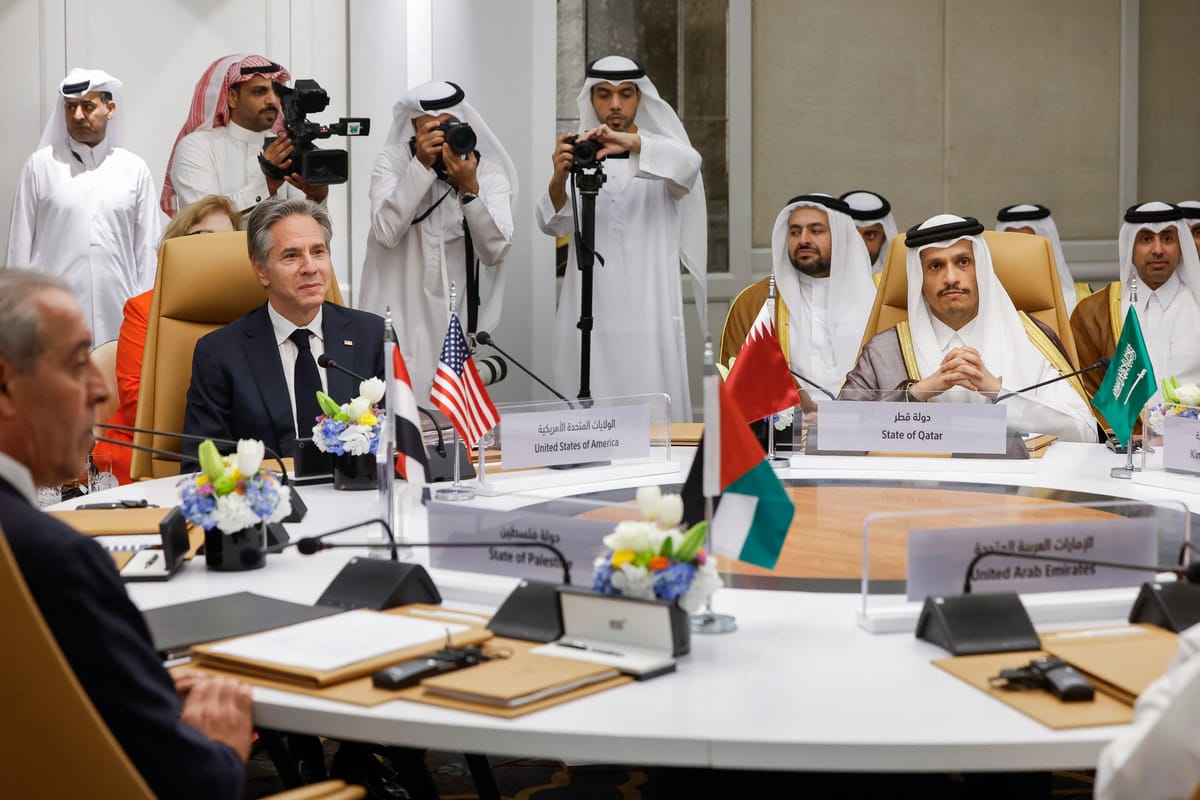
Sudan's Deepening Crisis and Doha's Diplomatic Window
As Sudan's devastating civil war grinds through its second year, the conflict has entered a dangerous new phase. Recent accusations by Khartoum that Ethiopia facilitated the Rapid Support Forces' capture of the strategic border town of Kurmuk have internationalized the war further, drawing in Horn of Africa rivalries that show no sign of abating. The UN Human Rights Office has expressed serious concern over the targeting of civilians, with the humanitarian catastrophe now ranking among the world's worst displacement crises.
It is within this volatile landscape that Qatar has positioned itself as one of the few Gulf states with credible diplomatic channels to multiple parties. Doha's approach to Sudan — rooted in years of mediation experience from Darfur peace talks to hosting Sudanese factional dialogues — gives it leverage that neither Riyadh nor Abu Dhabi currently commands. While other regional actors have been accused of backing one side or another, Qatar has carefully maintained its posture as an honest broker, a stance that keeps its diplomatic lines open as the conflict's regional spillover intensifies.
The Gulf Security Strain and Africa's Strategic Weight
Qatar's expanding African engagement cannot be separated from broader Gulf security dynamics. Doha has warned that the Gulf regional security system is being stretched by ongoing war and Iranian actions, a frank assessment that underscores why African partnerships have become not just diplomatic ambitions but strategic necessities. With Iran itself acknowledging the need for strategic alliances in regional conflicts, the competition for influence across the Red Sea, the Horn of Africa, and the Sahel has sharpened considerably.
For Qatar, Africa represents both a diversification of strategic depth and a hedge against Gulf instability. The country's investments across the continent — from port infrastructure in Sudan to development funds in East Africa — are designed to ensure that Doha's influence extends well beyond the Persian Gulf. This is not charity diplomacy; it is a calculated expansion of Qatar's footprint into regions where great-power competition between the United States, China, Russia, Turkey, and the UAE is already reshaping the political order.
The Doha-Ankara Axis in the Horn
Few bilateral relationships matter more for Qatar's Africa strategy than its partnership with Turkey. The recent phone call between President Erdogan and the Amir of Qatar discussing regional developments is the latest in a pattern of close coordination that has direct implications for the Horn of Africa and East Africa more broadly. Turkey maintains its largest overseas military base in Mogadishu and has invested heavily in Somali infrastructure, while Qatar has channeled diplomatic and financial support into stabilizing the Somali federal government.
This Doha-Ankara axis operates as a counterweight to the UAE's own African network, which stretches from Eritrea's ports to Somaliland's Berbera corridor. Where Abu Dhabi has cultivated ties with breakaway Somaliland — including recognition arrangements that Mogadishu considers a violation of sovereignty — Qatar and Turkey have stood firmly behind Somalia's territorial integrity and federal institutions. The competition is not merely ideological; it concerns control of maritime chokepoints, military basing rights, and the flow of trade through some of the world's most strategically vital waterways.
Somalia: Stabilization as Strategic Investment
Qatar's engagement with Somalia represents perhaps its most sustained African commitment. Doha has funded reconstruction projects, supported security sector reform, and maintained diplomatic support for Mogadishu through periods when other Gulf states were actively courting secessionist entities. This consistency has earned Qatar significant goodwill within Somalia's political establishment.
The strategic logic is clear. Somalia sits at the mouth of the Bab el-Mandeb strait, through which a significant share of global maritime trade passes. A stable, unified Somalia aligned with Doha serves Qatar's interests in securing energy transit routes and projecting influence into the Indian Ocean rim. Furthermore, Qatar's support for Somalia's federal government aligns with its broader foreign policy principle — that sovereign states should not be undermined by external actors pursuing narrow interests, a principle Doha holds with particular conviction following the 2017 blockade.
In practical terms, this has translated into Qatari-funded infrastructure projects, educational partnerships, and humanitarian aid that collectively represent one of the largest Gulf investment portfolios in the country. Unlike purely transactional engagement, Qatar's approach in Somalia blends development assistance with diplomatic backing, creating relationships that endure across election cycles.
Humanitarian Diplomacy as a Force Multiplier
Qatar's African strategy is reinforced by its humanitarian apparatus. Organizations such as Qatar Charity and the Qatar Fund for Development operate across multiple African countries, delivering aid that serves both genuine humanitarian needs and Doha's broader strategic objectives. In Sudan, Qatari humanitarian organizations have maintained operations even as other international actors have scaled back due to security concerns.
This humanitarian presence accomplishes several things simultaneously:
- It maintains Qatari visibility and goodwill in conflict-affected populations
- It provides Doha with on-the-ground intelligence and relationships that purely diplomatic channels cannot replicate
- It reinforces Qatar's international brand as a responsible middle power committed to alleviating suffering
- It creates institutional networks that can be leveraged when political negotiations require trusted intermediaries
The Ministry of Interior's recent call for the public to verify information through official sources also reflects a broader Qatari concern about disinformation in conflict zones — a problem acutely felt in both Sudan and Somalia, where competing narratives fuel violence and complicate mediation efforts.
Competing Visions for Africa's Future
Qatar's African expansion does not occur in a vacuum. The UAE has built a formidable network of port concessions, military relationships, and commercial investments stretching from Libya to Mozambique. Saudi Arabia has deployed its financial weight selectively, focusing on countries where religious diplomacy and energy partnerships intersect. Russia's Wagner Group — now rebranded but operationally similar — continues to offer security services to embattled regimes in the Sahel and Central Africa. China's Belt and Road infrastructure remains the continent's largest source of development finance.
What distinguishes Qatar's approach is its combination of diplomatic agility, humanitarian presence, and strategic partnerships — particularly with Turkey — that allow a small state to punch well above its demographic weight. Doha does not attempt to compete with Beijing on infrastructure spending or with Washington on military aid. Instead, it occupies a niche as a mediator, investor, and humanitarian actor that can engage simultaneously with parties that larger powers find difficult to bridge.
This model has limitations. Qatar's small population constrains its ability to sustain large-scale operations across multiple theatres. Its reliance on Turkey for military partnership means its influence is partly contingent on Ankara's own strategic calculations. And the sheer complexity of African conflicts — where local dynamics often overwhelm external interventions — means that even the most skillful diplomacy can produce disappointing results.
The Road Ahead for Doha in Africa
As 2026 unfolds, Qatar faces both opportunity and risk across the African continent. The Sudan crisis shows no signs of resolution, but Doha's maintained relationships with key actors position it to play a meaningful role if and when serious negotiations materialize. In Somalia, Qatar's long-term investment is beginning to yield returns in the form of durable political relationships and economic partnerships. Across the broader continent, Qatar's network of diplomatic missions, development projects, and humanitarian operations continues to expand.
The critical question is whether Qatar can sustain this level of engagement across an increasingly competitive landscape while simultaneously managing the Gulf security challenges it has publicly acknowledged. For a nation that transformed itself from a small peninsular emirate into a global diplomatic force within a single generation, the African theatre represents the next chapter in that transformation — one where the stakes are high, the competition fierce, and the rewards potentially enormous for those with the patience and skill to navigate the continent's extraordinary complexity.