Qatar Gaza Mediation 2026: Inside the Doha Talks That Shaped the Ceasefire
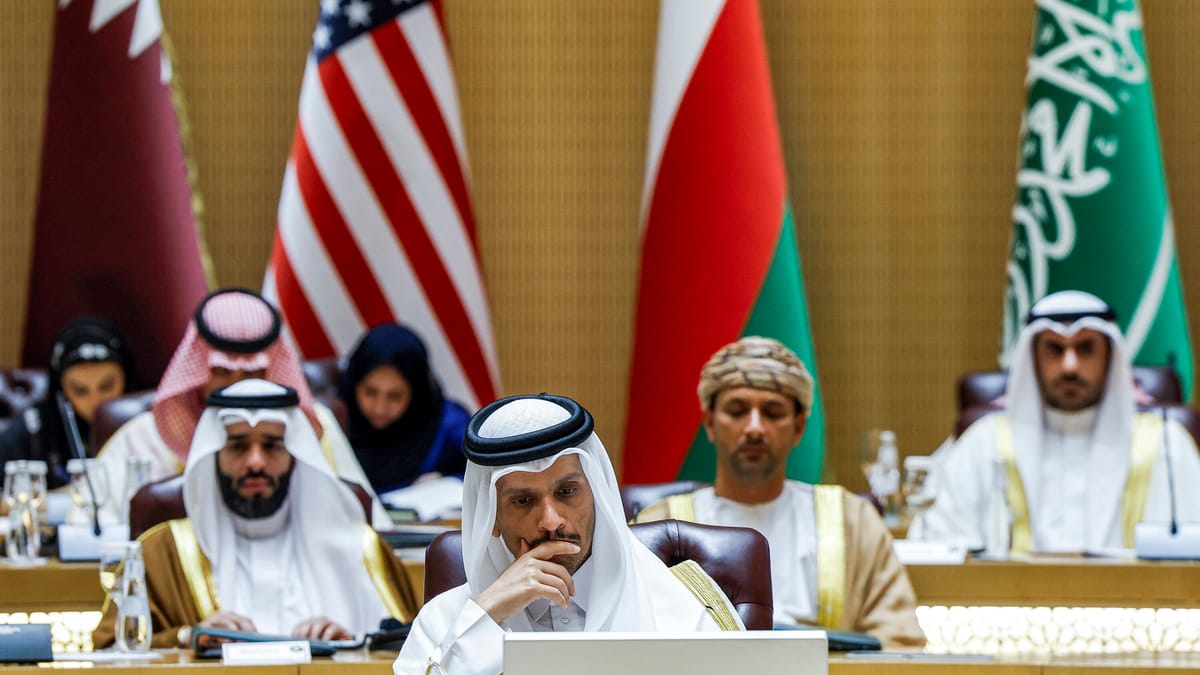
Doha's Quiet Leverage: How Qatar Brokered a Deal No One Else Could
When US Special Envoy Steve Witkoff announced the commencement of Phase Two of the Gaza peace plan on January 14, 2026, he did so from Washington — but the diplomatic architecture that made the announcement possible was built almost entirely in Doha. Qatar's Prime Minister and Minister of Foreign Affairs, Sheikh Mohammed bin Abdulrahman Al Thani, had spent the better part of two years engaged in relentless shuttle diplomacy, maintaining the only functioning channel between Hamas and the international community while simultaneously navigating Washington's shifting demands and Israel's intransigence.
The breakthrough did not come easily. Qatar had suspended its mediation role in November 2024 after accusing both sides of negotiating in bad faith. When it quietly re-engaged in early 2025, the calculus had changed. The Trump administration needed Doha's direct line to Hamas leadership — a channel no other state could replicate. By January 15, 2025, Qatar's Ministry of Foreign Affairs was able to announce what months of grinding back-channel work had produced: a ceasefire and prisoner exchange agreement between Israel and Hamas, which entered into force on January 19, 2025.
A senior Qatari diplomat involved in the talks described the process bluntly: "We were told a hundred times that the gaps were unbridgeable. Every time, we found a bridge." That bridge held through Phase One, the October 2025 ceasefire, and into the far more complex Phase Two negotiations that continue today.
Phase One Delivered Hostages and a Fragile Calm — At an Enormous Cost
The ceasefire that took hold on October 9, 2025 ended active large-scale combat operations, but the human toll was staggering. Phase One secured the release of 33 Israeli hostages — though the grim reality was that of the 48 remaining captives, only 20 were living. In exchange, Israel released nearly 1,900 Palestinian prisoners and detainees, along with approximately 500 remains of deceased Palestinians. Israeli forces withdrew from roughly 43 percent of Gaza, maintaining control over the rest, including the critical Rafah border crossing.
Humanitarian access improved immediately, with approximately 600 aid trucks per day entering the strip to serve a population that had been systematically starved for over a year. But even under the ceasefire, violence continued. According to UN documentation, between the ceasefire's start on October 10, 2025 and February 27, 2026, at least 631 Palestinians were killed in Israeli military operations — 224 of them near the Israeli-militarized "Yellow Line" zone, and 347 in attacks far from it.
Qatar's response to these violations was characteristically direct. Sheikh Mohammed bin Abdulrahman stated publicly that Doha "does not consider the current situation in Gaza to be a ceasefire", arguing that no genuine ceasefire exists without a full withdrawal of Israeli forces and the restoration of stability. It was a pointed rebuke that carried weight precisely because it came from the mediator, not a bystander.
The Board of Peace: Qatar Signs On at Davos as Governance Takes Shape
The diplomatic machinery shifted dramatically in January 2026. On January 14, Witkoff formally launched Phase Two alongside the formation of the National Committee for the Administration of Gaza, a technocratic body tasked with managing day-to-day governance during the transitional period. Eight days later, on January 22, Sheikh Mohammed bin Abdulrahman travelled to the World Economic Forum in Davos, Switzerland, where he signed Qatar's accession to the Board of Peace — the transitional governance body established under UN Security Council Resolution 2803, adopted on November 17, 2025.
The signing ceremony, held in the presence of President Trump and representatives from seven other Arab and Islamic states, formalized Qatar's commitment to supporting the Board's mission. Resolution 2803 represents the international legal backbone of the entire peace architecture — it endorses Trump's 20-point plan, welcomes the Board of Peace, authorizes the deployment of an International Stabilization Force (ISF), and establishes the framework for transitional governance.
Phase Two's ambitions are vast:
- Full Israeli military withdrawal to pre-designated lines within the Gaza Strip
- Decommissioning of Hamas weapons under international supervision
- Release of all remaining living hostages in exchange for 2,000 Palestinian prisoners, including 250 serving life sentences, within 72 hours of Israeli withdrawal
- Deployment of the International Stabilization Force to provide security during the transition
- A clear governance timeline transferring authority from the Board of Peace to a reformed Palestinian Authority
Five Nations Pledge Troops as the Stabilization Force Takes Shape
The security dimension of Phase Two gained concrete form in February 2026 when Major General Jasper Jeffers, the American officer tapped in January to command the ISF, outlined the force's deployment strategy. Speaking publicly for the first time, Jeffers announced that five nations — Indonesia, Morocco, Kazakhstan, Kosovo, and Albania — had formally committed troops. Indonesia's pledge of 8,000 soldiers made it the largest contributor, and Jakarta was designated as deputy commander of the force.
The ISF's deployment plan calls for an initial presence in the Rafah sector, expanding sector by sector toward a long-term target of 20,000 ISF soldiers and 12,000 trained police officers. Egypt and Jordan have already begun training Palestinian police recruits, a process that Doha is helping to coordinate and fund. The selection of Muslim-majority troop contributors was deliberate — a lesson learned from previous international deployments in the Middle East where Western military presence generated local resistance.
Qatar's role in assembling this coalition has been largely behind the scenes, leveraging its relationships with Jakarta, Rabat, and Astana to secure commitments that Washington alone could not extract. Doha's argument to potential contributors, according to diplomats familiar with the discussions, was straightforward: the alternative to a multilateral stabilization force was either permanent Israeli occupation or a security vacuum that would reignite the conflict.
Reconstruction Without a Blank Check: Qatar's Conditional Generosity
On the reconstruction front, Qatar has already emerged as the single largest humanitarian actor in Gaza. The Qatar Fund for Development (QFFD) signed a $20 million core contribution agreement with UNRWA to support operations across the occupied Palestinian territory, Syria, Lebanon, and Jordan through 2025-2026. Qatar Charity has committed over QR 114 million (approximately $31 million) in emergency aid. On the ground, Qatar's Gaza Reconstruction Committee has distributed more than 80,000 tents sheltering over 400,000 individuals, constructed and maintained 30 water wells at a cost exceeding $1 million, and removed approximately 372,000 tons of rubble along 100 kilometers of main roads to restore basic mobility and emergency access.
Yet Sheikh Mohammed bin Abdulrahman has drawn a clear line. In a statement that reverberated across Gulf capitals, he declared that Qatar "won't write a check to rebuild what Israel destroyed in Gaza." The message was unmistakable: reconstruction funding must be tied to political accountability and guarantees against future destruction. It was a position that resonated with Arab publics exhausted by cycles of destruction and reconstruction, and it signalled that Doha intends to use its financial leverage to shape the political endgame, not merely clean up after it.
The Road from Ceasefire to Statehood Runs Through Doha
As of mid-March 2026, the situation remains precarious. The UN's humanitarian update from March 6 noted that all crossings into Gaza except Kerem Shalom remain closed, medical evacuations are on hold, and sporadic violence continues across the strip. Yet there are signs of normalcy returning: the second semester of the 2025-2026 school year began on March 1, with UNRWA reporting that 58,543 children participated in learning activities across 595 classrooms in the first week alone.
Qatar's mediation architecture — the direct channels with Hamas, the coordination with Washington, the financial commitments, the Board of Peace membership, the quiet troop diplomacy — represents something rare in Middle Eastern peacemaking: a sustained, institutional effort by a small state that has made itself indispensable to every party at the table. The Doha talks did not produce a perfect peace. They produced the only viable path to one. Whether the international community has the discipline to walk that path through Phase Two and beyond remains the defining question of 2026.
What is no longer in question is who built the road.