Qatar Gaza Mediation 2026: Inside the Doha Talks That Shaped the Ceasefire
A Mediator Tested by Fire
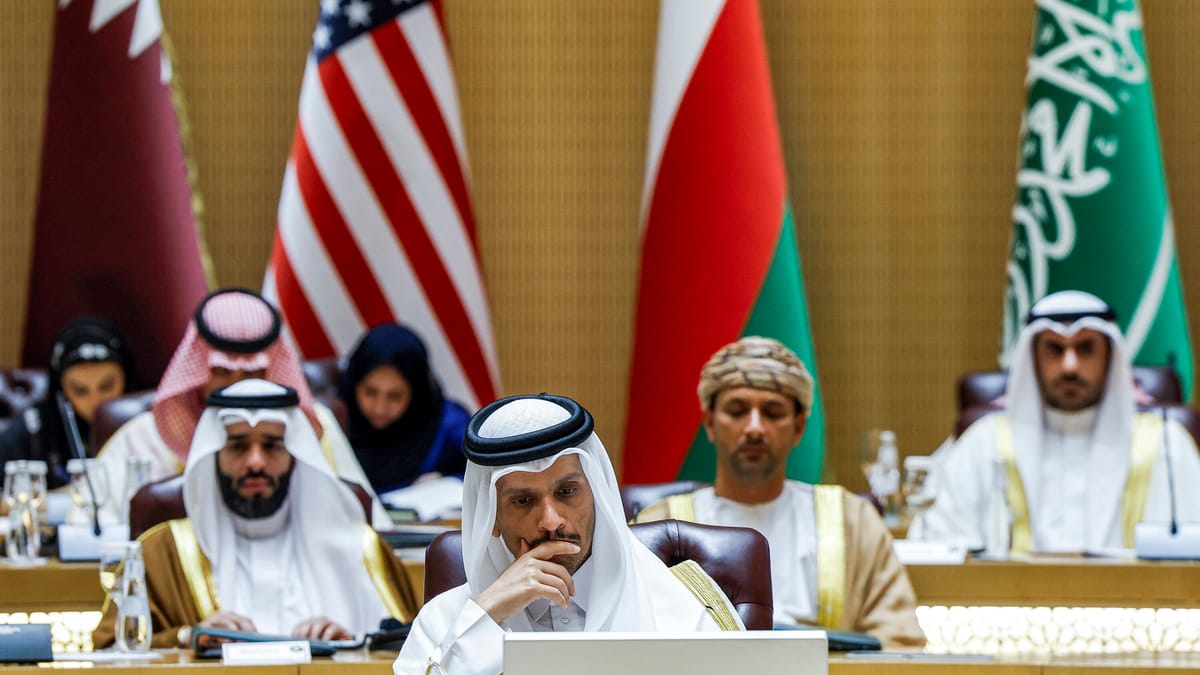
Few capitals in the world can claim to have brokered two ceasefire agreements in a single conflict within the span of nine months. Doha can. From the first fragile truce announced by Prime Minister Sheikh Mohammed bin Abdulrahman Al Thani on January 15, 2025, to the broader accord approved by the Israeli cabinet on October 10 of that year, Qatar's diplomatic apparatus has been the indispensable engine behind every serious attempt to halt the bloodshed in Gaza. Now, as Phase 2 of the peace framework enters its third month of implementation amid mounting Israeli threats of a renewed Gaza City offensive, the question is not whether Qatar's mediation matters — it is whether anything can work without it.
The January Accord and Its Unravelling
After fifteen months of war, the joint mediation of Qatar, Egypt, and the United States produced the January 19, 2025 ceasefire — a three-phase structure designed to move from hostage releases and humanitarian corridors toward a permanent end to hostilities. Phase 1 alone was a logistical feat: 33 Israeli captives were to be released in exchange for roughly 2,000 Palestinian prisoners, while Israeli forces began withdrawing from populated areas and humanitarian aid surged into the Strip.
The early weeks appeared to vindicate the mediators. Hostage releases proceeded on schedule — three Israeli women on January 19, followed by further exchanges through February. By February 22, six living hostages including Avera Mengistu and Hisham al-Sayed were returned, and by February 26, the bodies of four more were handed over. But even as families reunited, the deal's foundations were cracking. Israel refused to release 620 Palestinian prisoners as stipulated, and negotiations for Phase 2 — which required a full Israeli military withdrawal and a declaration of permanent ceasefire — stalled through spring and into summer.
By July 5, 2025, Israel and Hamas were back in Doha for indirect talks. On August 18, Hamas formally accepted a new truce proposal backed by Qatar's Prime Minister and Egyptian President Abdel Fattah el-Sisi. Eight days later, on August 26, Qatar publicly stated that Israel had yet to respond. The diplomatic patience that Doha had cultivated over years of shuttle diplomacy was being tested to its limit.
September 9: The Strike That Nearly Ended Everything
What happened next had no precedent in the modern history of international mediation. On September 9, 2025, Israel launched an airstrike on a residential complex in Doha's Leqtaifiya district — a sovereign act of war against the very country hosting the peace talks. Eight F-15s and four F-35s fired air-launched ballistic missiles from over the Red Sea, targeting senior Hamas political figures including negotiator Khalil al-Hayya and political bureau chief Khaled Mashal, who were gathered to consider a U.S. ceasefire proposal.
The Hamas leadership survived. Al-Hayya's son did not. Five lower-level operatives were killed alongside a Qatari security officer. The United Nations condemned the strike as "a shocking breach of international law." Qatar immediately suspended its mediation, with officials stating that talks were "not valid right now."
The timing was devastating. Just one day earlier, on September 8, Qatar had pressed Hamas to "respond positively" to the American proposal. Doha was closer than ever to bridging the gap — and Israel bombed the bridge. The message, intended to decapitate Hamas's political wing, instead exposed the fragility of mediation conducted under the shadow of military escalation.
Yet Qatar did not walk away permanently. Sheikh Mohammed bin Abdulrahman vowed that nothing would "deter its role," while demanding a public Israeli apology. The Trump administration, recognizing that losing Qatar as a mediator would collapse the entire diplomatic framework, pressured Netanyahu to comply. He did — reluctantly and publicly.
The October Deal and the Trump 20-Point Plan
Barely a month after the Doha strike, Emir Tamim bin Hamad Al Thani sat across from President Donald Trump, President el-Sisi, and Turkish President Recep Tayyip Erdogan at a ceasefire summit in Sharm el-Sheikh on October 13, 2025. The meeting produced the political framework for what became the second ceasefire agreement, approved by the Israeli cabinet in the early hours of October 10.
The deal was built around a sweeping American blueprint — the Trump 20-Point Plan — which included:
- An immediate ceasefire and return of all remaining hostages
- Full demilitarization of Gaza
- Deployment of an International Stabilization Force (ISF)
- Transitional governance by Palestinian technocrats
- Large-scale reconstruction funding
- A conditional pathway toward Palestinian statehood
The breadth of international support was striking — France, Germany, Russia, the UAE, Turkey, Jordan, Indonesia, Pakistan, Canada, and the United Kingdom all endorsed the framework. A Civil-Military Coordination Center under U.S. Admiral Brad Cooper was established to manage the humanitarian and security transition. Qatar's role shifted from pure mediation to active stakeholder, its diplomatic credibility reinforced rather than diminished by the crisis it had survived.
But implementation told a different story. Between October 10, 2025, and January 9, 2026, Israel violated the ceasefire at least 1,193 times through airstrikes, artillery fire, and shootings — a pattern that underscored the gap between what was agreed in diplomatic salons and what was happening on the ground in Gaza.
Phase 2: Declarations and Deadlocks
On January 14, 2026, U.S. Special Envoy Steve Witkoff announced the formal launch of Phase 2, declaring it would begin "full demilitarization and reconstruction of Gaza." A National Committee for the Administration of Gaza — comprising approximately 15 Palestinian technocratic leaders — was formed to manage civil governance including sanitation, infrastructure, and education.
Qatar welcomed the announcement. The Ministry of Foreign Affairs confirmed it was "engaged with mediators" to implement Phase 2 and reopen the Rafah crossing, which Qatar has described as being held hostage to Israeli "political blackmail." A joint Qatar-Egypt statement issued on January 6 affirmed their "tireless efforts" on the mediation file.
Netanyahu, however, called the Phase 2 announcement a "declarative move" rather than genuine progress. He insisted the priority was demilitarization, not reconstruction, and restated his opposition to Palestinian statehood. Israeli military planners simultaneously drew up plans for a new Gaza City offensive in March 2026 — the very month in which Phase 2 was supposed to be delivering stability.
The Obstacles Ahead — And Why Doha Remains Central
As of late March 2026, the ceasefire framework faces several existential threats. Hamas refuses to disarm — the central demand of Phase 2's demilitarization clause. The International Stabilization Force remains largely theoretical; the United States has approached more than 70 countries for troop contributions, but only Indonesia and Morocco are assessed as likely contributors, with no formal commitments secured. The Rafah crossing remains closed. Netanyahu, facing a 2026 election, must balance cooperation with Washington against far-right coalition partners who reject any ceasefire at all — a dynamic on full display this week as he summoned coalition leaders for urgent consultations amid the Iran agreement talks.
Qatar's Prime Minister warned in December 2025 that the ceasefire was at a "critical moment" and could unravel entirely. That assessment has only grown more prescient. The Qatar-Egypt-Turkey mediation triangle remains intact but strained, and the diplomatic calendar is crowded — as evidenced by Qatar's ambassador participating in meetings with both the Indian Foreign Minister and Uzbekistan's First Deputy Foreign Minister in recent days, reflecting Doha's broader strategic engagement even as Gaza consumes its diplomatic bandwidth.
What makes Qatar's position irreplaceable is structural, not sentimental. Doha maintains direct communication channels with Hamas's political leadership — channels that survived even the September airstrike on Qatari soil. It hosts the physical infrastructure of negotiation. And it has demonstrated a willingness to absorb extraordinary diplomatic costs — including a military attack on its own territory — without abandoning the process. No other mediator in this conflict can claim the same resilience. The ceasefire's survival, fragile as it is, remains a Doha story.