Qatar Education City in 2026: Rankings, Research, and Why Global Universities Chose Doha
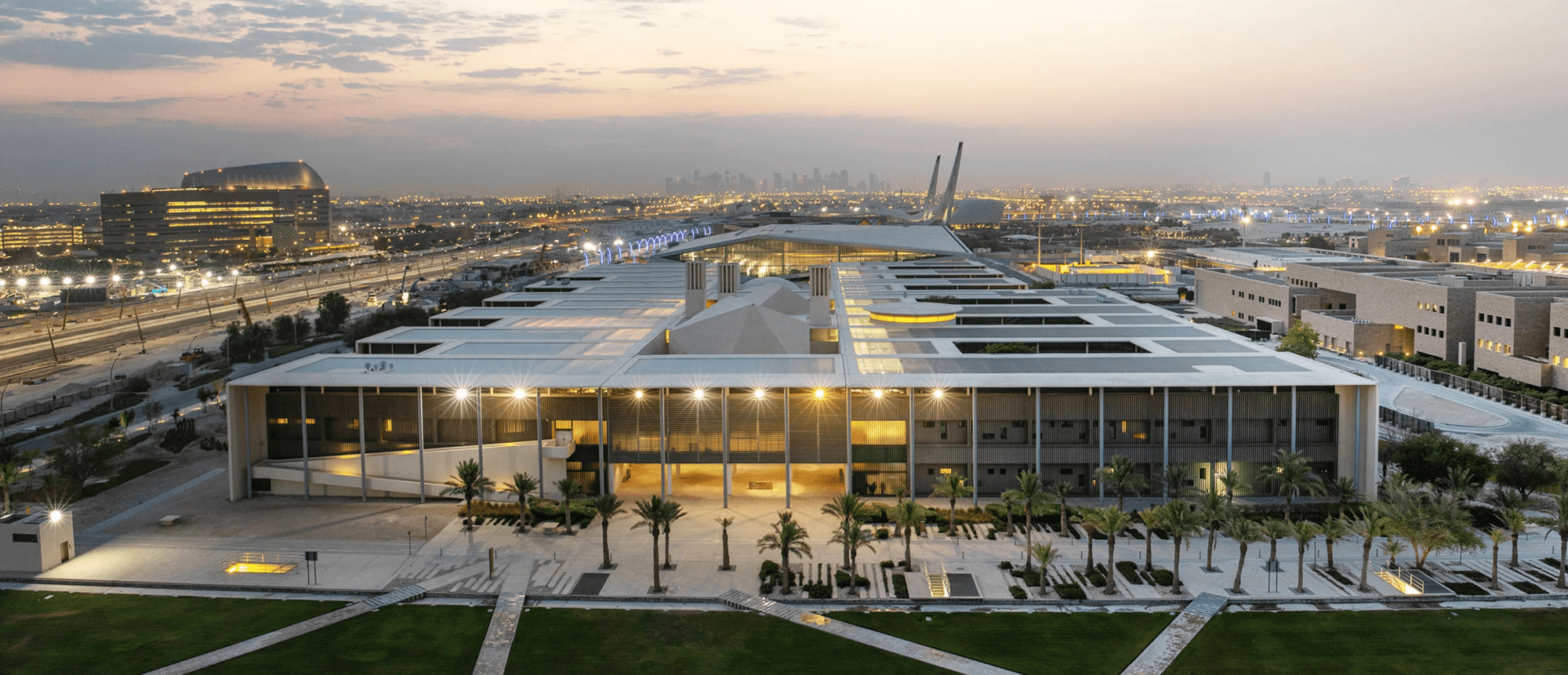
The Doha Campus Model Under Pressure
In early March 2026, Weill Cornell Medicine-Qatar closed its campus facilities and shifted to remote learning after the U.S. Embassy in Qatar issued a shelter-in-place directive amid military escalation in the region. Eight clinical rotations were relocated to New York to keep medical students on track. The episode was a stark reminder that Education City — Qatar Foundation's crown jewel of soft power — operates at the intersection of academic ambition and geopolitical reality.
Yet even as headlines tested the model, the numbers told a different story. Qatar University climbed to #112 in the QS World University Rankings 2026, holding second place in the QS Arab Region Rankings behind only Saudi Arabia's King Fahd University. Qatar posted the highest average score in six of the ten QS Arab Region indicators — a feat no other country in the ranking matched. Hamad Bin Khalifa University, the homegrown research institution at Education City's core, reached #244 globally in QS rankings and now counts 243 globally ranked scientists among its faculty.
Why World-Class Universities Planted Flags in Doha
The logic that drew Georgetown, Carnegie Mellon, Northwestern, Virginia Commonwealth, Weill Cornell, and HEC Paris to a patch of desert outside Doha has always been transactional — but not cynically so. Qatar Foundation underwrites virtually every operating cost: infrastructure, faculty salaries, program delivery. In exchange, these institutions export their brand, curriculum, and accreditation to a region hungry for Western credentials.
The scale of that exchange became impossible to ignore in February 2026, when the U.S. Department of Education released new foreign-funding disclosures showing that American universities reported accepting more than $1.1 billion from Qatar in 2025 alone — making the Gulf state the single largest disclosed foreign source of gifts and contracts to U.S. higher education. Carnegie Mellon, which renewed its Qatar Foundation agreement through 2035 in May 2025, has received a cumulative $2 billion from Qatar, with 90 percent spent on its Education City campus. The Pittsburgh Post-Gazette reported in February 2026 that CMU ranked second only to Harvard in total foreign funding received by an American institution.
For Qatar, the return is measured in human capital. Carnegie Mellon Qatar recorded its highest enrollment in campus history — over 450 students from 61 countries, 40 percent of them Qatari nationals. Northwestern Qatar enrolls roughly 500 students. Weill Cornell Medicine-Qatar has grown from 25 first-year pre-medical students in 2002 to over 300 students from more than 30 countries, awarding the same Cornell M.D. degree as the New York campus.
Texas A&M's Exit and the Domino That Didn't Fall
When the Texas A&M Board of Regents voted in February 2024 to shutter its Qatar campus by 2028 — citing "heightened instability in the Middle East" and a desire to refocus on U.S. operations — observers warned of a domino effect. The 730-student engineering school, which had graduated more than 1,500 students since 2003, was the first major departure from Education City.
Two years later, that domino has not materialised. Carnegie Mellon locked in a ten-year extension. Georgetown, Northwestern, and Virginia Commonwealth continue operations. Weill Cornell, despite the March 2026 campus closure, signalled continuity by opening New York-based telehealth electives for displaced students rather than announcing any withdrawal. The resilience suggests that the financial architecture Qatar Foundation built — absorbing nearly all operational risk from partner institutions — creates a stickiness that political pressure alone cannot easily dissolve.
That stickiness, however, now faces scrutiny from Washington. A White House executive action in April 2025 directed stricter enforcement of Section 117 foreign-funding disclosure laws, noting they had not been "robustly enforced." In early 2026, a federal judge ordered Carnegie Mellon to release documents related to its Qatar financial relationship as part of a civil-rights lawsuit. The Department of Education has opened investigations into Harvard, the University of Pennsylvania, UC Berkeley, and the University of Michigan over late or inaccurate foreign-funding disclosures.
The Research Engine Behind the Rankings
Education City's value proposition was never just about undergraduate degrees. Qatar Foundation has invested over $1.4 billion through the Qatar National Research Fund, producing more than 330 inventions. In 2024, Qatar Foundation institutions published 2,500 research papers, secured 20 patents, and collaborated with researchers in 120 countries. Forty percent of all published research in Qatar comes from Qatar Foundation institutions, and roughly half of it is open access.
HBKU anchors this effort through three national research institutes — the Qatar Environment and Energy Research Institute, the Qatar Computing Research Institute, and the Qatar Biomedical Research Institute — alongside HBKU Press, which has published more than 90 books and operates QScience, an online academic platform. The university leads the Arab Region in papers per faculty, according to QS data, a metric that reflects genuine research intensity rather than institutional size.
The innovation pipeline extends beyond academia. Qatar Science and Technology Park, located adjacent to Education City, now hosts over 300 companies including 20 multinationals. In February 2026, QSTP launched a WaterTech Accelerator with TotalEnergies targeting up to 60 startups across the MENA region, alongside a FemTech Accelerator with Merck. A landmark arrival came when imec, the Belgian semiconductor research giant, established a regional hub at QSTP — a defining step toward building Qatar's semiconductor ecosystem.
Vision 2030 at the Four-Year Mark
Education City does not exist in isolation. It is the centrepiece of Qatar National Vision 2030's human development pillar, and the progress metrics are accumulating. Qatar jumped from 65th to 49th in the Global Innovation Index between 2019 and 2024, ranking sixth in Northern Africa and Western Asia. The country's overall competitiveness ranking rose from 26th to 20th between 2024 and 2025. Plans to open four new STEM schools by 2026, accommodating over 2,000 students, feed the pipeline that Education City's universities ultimately draw from.
The broader ecosystem is gaining momentum. The Third Web Summit Qatar in 2026 drew a record 30,000 participants from 127 countries, with nearly 1,000 investors and 1,637 startups — 38 percent of them women-founded. The government has committed $3.5 billion in startup investment, and Qatar's economy is projected to grow 5.5 percent in 2026, fuelled partly by this knowledge-economy push.
The Calculation Ahead
Education City in 2026 is a project caught between vindication and vulnerability. The rankings are climbing. The research output is real. The startup ecosystem is maturing. Carnegie Mellon's billion-dollar commitment through 2035 is perhaps the strongest institutional vote of confidence the model has ever received.
But the ground is shifting. Washington's new transparency regime means the financial relationships that underpin Education City will face sustained public scrutiny in the United States. Regional instability, as the Weill Cornell campus closure demonstrated, can disrupt operations overnight. And Texas A&M's departure — even if no domino followed — established a precedent: leaving is possible.
For Qatar, the strategic response has been characteristically pragmatic. Rather than chasing replacements for Texas A&M, Qatar Foundation has doubled down on homegrown capacity through HBKU and QSTP, while deepening ties with committed partners. The bet is that institutions with billions invested and decades of operational history in Doha are not going to walk away over headlines. So far, that bet is paying off — but the margin for error has narrowed considerably.