Qatar and Trump: What Al Udeid Air Base Means for US Middle East Strategy in 2026
Al Udeid at the Center of the Storm
As US Central Command confirms ongoing air operations from the USS Abraham Lincoln in support of what the Pentagon has designated Operation Epic Fury, and open-source intelligence points to the possible mobilization of American paratroopers to the Middle East, a familiar installation has once again become the most consequential piece of real estate in the region: Al Udeid Air Base, located thirty-five kilometers southwest of Doha.
The sprawling facility — home to the forward headquarters of CENTCOM and the Combined Air Operations Center that coordinates all US and coalition air movements across twenty nations — is operating at a tempo not seen since the early months of the wars in Iraq and Afghanistan. What happens at Al Udeid in the coming weeks will shape not only the trajectory of the current Iran crisis but also the broader architecture of American power projection in the Gulf for years to come.
Why Al Udeid Cannot Be Replaced
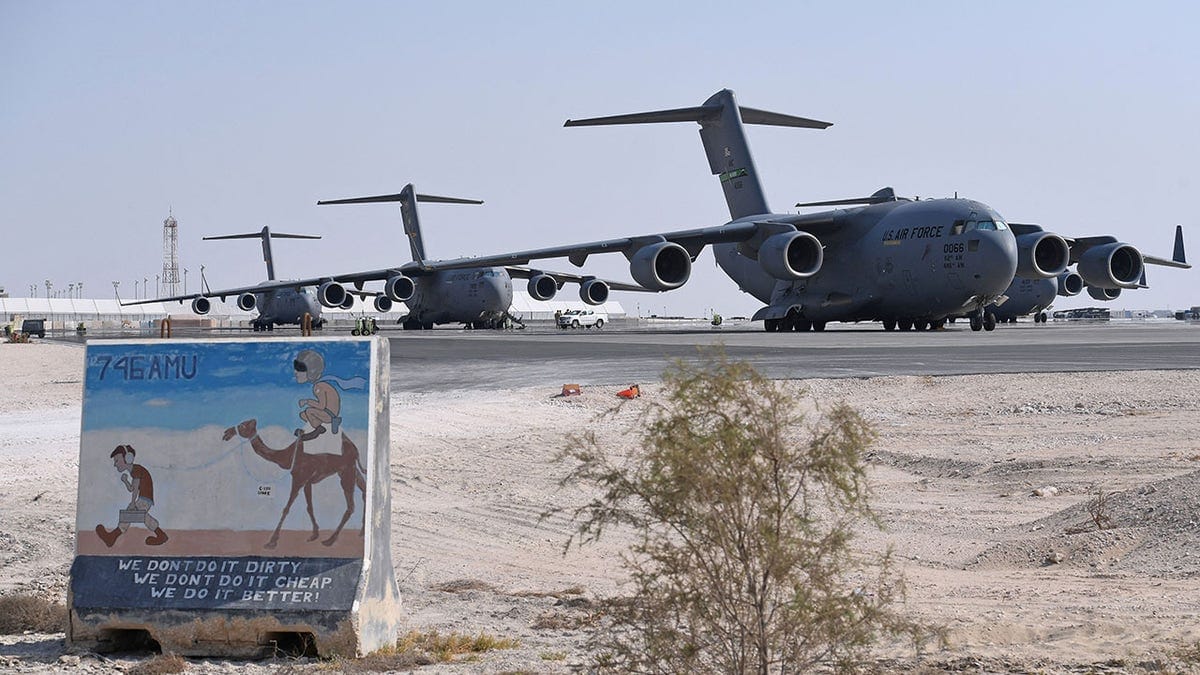
Al Udeid is not merely another overseas base. It hosts the longest runway in the Gulf region at nearly 3,800 meters, capable of handling every aircraft in the US inventory, from B-52 strategic bombers to C-17 heavy transport planes. The Combined Air Operations Center — a hardened, climate-controlled nerve center — provides real-time command and control over air campaigns spanning from the Horn of Africa to Central Asia. No other facility in the region offers this combination of infrastructure, capacity, and strategic depth.
Alternatives have been discussed for years. The UAE's Al Dhafra Air Base houses a significant American presence, but Abu Dhabi has repeatedly signaled limits on how that facility can be used in operations that risk escalation with Iran. Bahrain hosts the US Fifth Fleet but lacks the runway and ramp space for large-scale air operations. Saudi Arabia's Prince Sultan Air Base was reactivated for limited deployments but carries political sensitivities that both Washington and Riyadh prefer to manage carefully. Al Udeid remains the only installation where the United States can surge forces, launch sustained combat operations, and coordinate a multi-theater air campaign simultaneously.
Trump's Transactional Lens and Doha's Leverage
President Trump has long viewed overseas basing arrangements through a transactional framework, publicly questioning whether host nations contribute enough to justify America's military footprint. During his first term, he pressured allies from South Korea to Germany over burden-sharing. Qatar, however, has largely insulated itself from this pressure by investing heavily in the relationship on multiple fronts.
Doha financed the most recent major expansion of Al Udeid's facilities, spending hundreds of millions of dollars on new housing, hangars, and operational infrastructure. Qatar has consistently purchased American weapons systems, including F-15 fighter jets and Patriot missile defense batteries. The country has also positioned itself as a diplomatic intermediary in crises where Washington needs a channel — from Afghanistan's Doha Agreement to hostage negotiations involving Hamas.
This combination of military hosting, defense procurement, and diplomatic utility gives Qatar a form of leverage that few US partners in the region possess. In a moment when American forces are actively conducting combat operations from Qatari soil — as the Epic Fury mission indicates — that leverage only grows.
The Iran Escalation and Al Udeid's Operational Role
The current regional picture is defined by rising tensions with Tehran. Protests have erupted in major Iranian cities, with demonstrators demanding continued military action against the United States and Israel — a signal that domestic politics in Iran may be pushing the regime toward confrontation rather than de-escalation. Reports of Iranian missile threats have prompted criticism from residents of the Negev region toward the Israeli government's response, while Israeli strikes continue to target sites in southern Lebanon.
In this environment, Al Udeid's role extends well beyond hosting fighter squadrons. The base functions as the intelligence fusion center for the entire theater, processing surveillance data from drones, satellites, and signals intelligence platforms. It is where targeting decisions are reviewed, where air refueling operations are coordinated for aircraft patrolling the Strait of Hormuz, and where the logistics chain that sustains tens of thousands of American personnel across the region is managed.
The reported mobilization of US paratroopers — units typically held in reserve for rapid-response contingencies — suggests that CENTCOM is preparing for scenarios that go beyond the current air campaign. Any ground force deployment into the region would depend heavily on Al Udeid as a staging and coordination hub, reinforcing Qatar's centrality to whatever comes next.
Doha's Diplomatic Balancing Act
Qatar's hosting of the largest American military installation in the Middle East has never been without tension. Doha maintains diplomatic relations with Tehran and shares the world's largest natural gas field — the North Field/South Pars reservoir — with Iran. Qatari leadership has consistently argued that dialogue with Iran serves both regional stability and American interests, a position that has at times placed it at odds with Washington's more hawkish impulses.
The current crisis tests this balance more acutely than any moment since the 2017 blockade, when Saudi Arabia, the UAE, Bahrain, and Egypt severed ties with Qatar partly over its relationship with Iran. Doha weathered that storm with a combination of Turkish military support, economic resilience, and the fact that Washington could not afford to alienate a country hosting its most critical regional base.
Today, the calculus is similar but the stakes are higher. If Operation Epic Fury escalates into a sustained campaign, Qatar will face growing pressure to demonstrate solidarity with its American partner while preserving the Iranian relationship that underpins its energy security and its self-image as a neutral mediator. Early indications suggest Doha is managing this by quietly facilitating military operations while publicly emphasizing the need for diplomatic solutions — a formula that has served it well in previous crises.
What Washington Stands to Lose
For American strategists, the dependency on Al Udeid represents both an asset and a vulnerability. The concentration of command-and-control functions at a single installation creates what military planners call a "single point of failure" — a reality that Iran's missile and drone capabilities have made increasingly uncomfortable. The base is within range of Iranian ballistic missiles, and any conflict scenario must account for the possibility that Al Udeid itself could be targeted.
Yet the alternatives remain inadequate. Distributing CENTCOM's functions across multiple smaller installations would reduce vulnerability but also reduce capability and increase costs. Building a comparable facility elsewhere — even if a willing host could be found — would take years and billions of dollars. The United States is, in practical terms, committed to Al Udeid for the foreseeable future, and both governments know it.
This mutual dependency is precisely what makes the Qatar-US relationship durable despite periodic friction. Trump may demand more from partners, but he cannot demand what no one else can provide. Qatar may chafe at being drawn into military confrontations with its neighbor, but it cannot afford to lose the security guarantee that American presence provides.
The Base That Shapes the Region
As American paratroopers prepare for possible deployment and combat aircraft cycle through missions over the Gulf, Al Udeid Air Base remains what it has been for more than two decades: the indispensable platform for American power in the Middle East. Neither Washington nor Doha chose this arrangement lightly, and neither can easily walk away from it.
The current crisis will pass, as previous ones have. What will endure is the structural reality that Qatar's geographic position, its willingness to host, and the sheer scale of the infrastructure at Al Udeid make it irreplaceable. For the Trump administration, managing this relationship with care — rather than treating it as another line item in a burden-sharing ledger — may be among the most consequential decisions it makes in the region this year. The alternative is not a better deal somewhere else. The alternative is diminished American capability at the worst possible time.