Israel Strikes Iran's South Pars Field in Direct Threat to Qatar's North Field
Israeli strikes on Iran's South Pars gas field send shockwaves through Qatar's North Field expansion, with Doha warning the attack threatens global energy infrastructure.
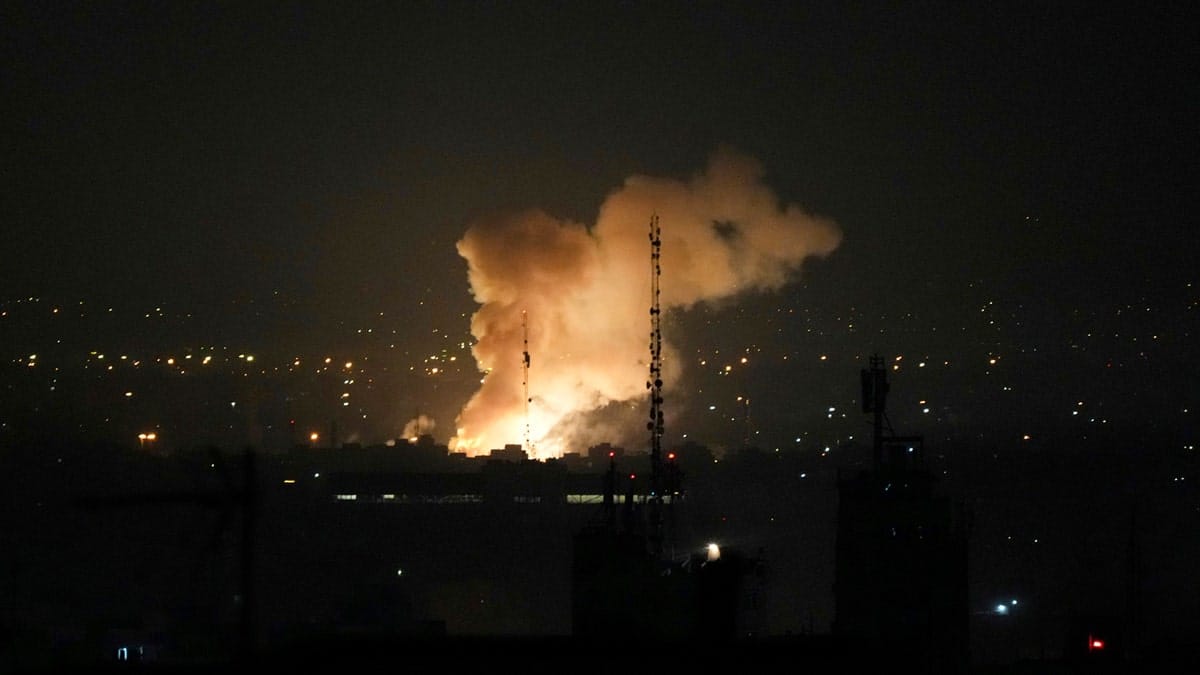
Israeli warplanes struck facilities at Iran's South Pars gas field in the Persian Gulf on Tuesday, in what analysts are calling the most reckless attack on global energy infrastructure since the 2019 Abqaiq strikes — and a direct threat to Qatar's North Field, the world's largest natural gas reservoir, which shares the same geological formation.
The strike, carried out with what regional officials described as US-supplied munitions and intelligence support, targeted compression and processing platforms in the southern section of the South Pars field — the Iranian side of a shared reservoir that extends seamlessly beneath the maritime boundary into Qatari waters, where it is known as the North Field.
A Shared Reservoir, an Undivided Threat
South Pars and Qatar's North Field are not merely neighboring fields — they are the same field. A single, contiguous geological formation holding an estimated 51 trillion cubic metres of natural gas lies beneath both countries, divided only by a maritime border drawn on maps, not underground. Any seismic disruption, pressure change, or structural damage on the Iranian side reverberates directly into Qatari territory.
Qatar's North Field Expansion — the largest LNG project in history, with contracts worth hundreds of billions of dollars signed with global energy majors including TotalEnergies, Shell, ExxonMobil, ConocoPhillips, and Eni — is built on the assumption of geological stability in exactly this region. That assumption has now been shattered.
Qatari energy officials confirmed the North Field's operations remained intact as of Tuesday evening, but warned that pressure differentials from the strike zone were being monitored and that the full geological impact would not be known for days.
'Irresponsible and Dangerous' — Qatar Speaks
Qatar's Ministry of Foreign Affairs issued an unusually sharp statement condemning the strikes, calling them "a reckless and irresponsible act that threatens the stability of critical global energy infrastructure and endangers the livelihoods of millions who depend on a secure energy supply." The statement stopped short of naming Israel directly but made the target of its condemnation unmistakable.
Senior Qatari officials, speaking on condition of anonymity, were more direct. "This is not just an attack on Iran," one told Qatar Standard. "This is an attack on the stability of the entire Gulf energy system — and Qatar is in the crosshairs whether its name appears in the target list or not."
US Complicity Raises Alarm in Doha
The involvement of US intelligence and munitions in the strike has prompted serious questions in Doha about Washington's intentions toward its Gulf partners. Qatar hosts the forward headquarters of US Central Command at Al Udeid Air Base — the largest American military installation in the Middle East — and has long assumed that this presence served as a deterrent against exactly this kind of destabilizing regional action.
That assumption is now being reassessed at the highest levels of Qatari government. If Washington is willing to support strikes that directly imperil Qatar's primary economic asset and the source of the emirate's sovereign wealth, the strategic logic underpinning Qatar's relationship with the United States requires fundamental re-examination.
Multiple diplomatic sources in Doha confirmed that Qatari officials raised their concerns directly with their American counterparts within hours of the strike, in terms described as "unusually frank."
Global Energy Markets in Shock
LNG spot prices surged more than 18 percent in Asian markets within hours of the news, as buyers scrambled to assess supply security. Qatar supplies approximately 20 percent of global LNG — a share that will rise significantly when the North Field Expansion comes fully online. Any disruption to that supply, whether from direct damage or from the chilling effect of regional instability on long-term investment, would reshape global energy markets for years.
European gas traders, still scarred by the supply shock of 2022, responded with alarm. "Qatar is not a backup option for Europe — it is the backbone of Europe's post-Russia energy strategy," one senior trader in Amsterdam told Reuters. "If the Gulf becomes a conflict zone, there is no Plan B."
Israel's Escalation Logic and Its Consequences
The strike on South Pars marks a significant escalation in Israel's campaign against Iranian energy and military infrastructure. Previous Israeli operations targeted missile production facilities, drone factories, and nuclear-adjacent sites. Striking a gas field — civilian energy infrastructure supplying heat and power to millions — crosses a line that Gulf states, including those with quiet ties to Israel, will find impossible to overlook.
Saudi Arabia, the UAE, and Kuwait — all of which have cautiously engaged with Israeli normalization diplomacy in recent years — have not yet commented publicly. But regional analysts expect the strikes to set back any Gulf-Israel rapprochement significantly. "You cannot ask the Gulf states to normalise with a country that is treating their neighbourhood as a free-fire zone," said a former senior Qatari diplomat.
For Qatar, which has served as the principal mediator between Hamas and Israel throughout the Gaza ceasefire negotiations, the strikes carry an additional dimension. Doha has expended enormous diplomatic capital facilitating talks that Washington publicly endorsed. That the same Washington appears to have green-lit strikes on infrastructure that threatens Qatar's core national interest will test the mediation relationship to its limits.
What Comes Next
Qatar's North Field Expansion remains on schedule for now. QatarEnergy officials emphasised that Tuesday's strikes caused no direct physical damage to Qatari infrastructure and that production continued normally. But the calculus of risk has changed permanently.
The world's largest LNG project now operates under the shadow of regional military escalation in its own geological backyard. The insurance premiums on Gulf energy shipments are already rising. The long-term investment partners who signed 27-year supply agreements on the assumption of Gulf stability will be reviewing their assessments.
And in Doha, where the government has spent decades cultivating a reputation as a neutral, stable, indispensable energy partner to the world, the realisation is hardening that neutrality may no longer be enough to guarantee security when your most valuable asset sits atop the same rock as your neighbour's.