Iran Sanctions Drive Gulf Oil Price Surge, Boost Qatar LNG Exports in 2026
The Hormuz Chokepoint: A $1.2 Trillion Vulnerability Laid Bare
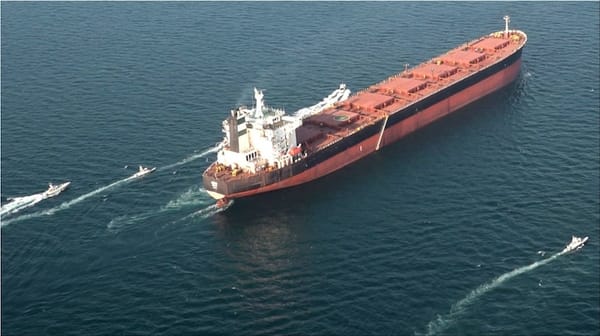
As Brent crude hovers near $96.80 per barrel on 15 April 2026 — still 47 percent higher than a year ago — the Gulf's hydrocarbon economies are confronting the most severe supply disruption in the history of global oil markets. Since the United States and Israel launched air strikes against Iran on 28 February 2026, the Islamic Revolutionary Guard Corps has effectively blocked the Strait of Hormuz, through which roughly 25 percent of the world's seaborne oil and 20 percent of its liquefied natural gas once flowed freely. The International Energy Agency has called this the "greatest global energy security challenge in history", and the numbers bear that out: a simulation study from March warned that a prolonged closure could put $1.2 trillion in annual Gulf exports at risk.
For Qatar — the world's largest LNG exporter — the crisis has moved beyond market volatility into the realm of structural economic damage. The question confronting Doha and its Gulf neighbours is no longer whether the war will disrupt energy markets, but how profoundly it will reshape the region's economic architecture for a generation.
Qatar's LNG Lifeline Under Direct Fire
Qatar has emerged as the most strategically exposed Gulf state in this conflict. On 18 March, Iranian strikes hit the Ras Laffan Industrial City — the nerve centre of Qatari LNG production — causing a 17 percent reduction in the country's export capacity. QatarEnergy declared force majeure on all LNG contracts on 24 March, and engineers estimate repairs will require three to five years, translating into revenue losses of approximately $20 billion over that period. Nearly 50 Qatari LNG tankers sit idle across Asian ports, unable to load or deliver cargo.
The damage extends far beyond Qatar's shores. Asian LNG spot prices have surged by over 140 percent, punishing import-dependent economies across East and South Asia. Europe, which sources 12 to 14 percent of its LNG from Qatar, faces renewed energy security anxieties just as it had begun stabilising after the Russian gas disruptions of 2022–2023. The irony is bitter: the very infrastructure Qatar built to become the world's most reliable LNG supplier — concentrated at a single industrial complex accessible only through the Hormuz chokepoint — has proven to be its greatest vulnerability.
Riyadh and Abu Dhabi: Pipeline Bypass, but Not Enough
Saudi Arabia and the UAE have fared comparatively better, thanks to overland pipeline systems that bypass the strait entirely. Saudi Arabia's East-West Petroline, a 750-mile network connecting the eastern oil fields at Abqaiq to the Red Sea port of Yanbu, has been ramped to near its full 7 million barrels per day capacity after auxiliary gas-liquids pipelines were converted to carry crude. Exports through Yanbu have reached roughly 5 million barrels per day, supplemented by 700,000 to 900,000 barrels daily of refined products. The UAE's Abu Dhabi Crude Oil Pipeline (ADCOP) — a 400-kilometre link from Habshan to the Indian Ocean port of Fujairah — adds another 1.5 to 1.8 million barrels per day of bypass capacity.
Yet these alternatives are insufficient to replace the strait's throughput. Combined bypass capacity totals roughly 9 million barrels per day against the 20 million that once transited Hormuz. Moreover, the pipelines themselves are land-based infrastructure within range of Iranian missiles and drones, a reality that injects persistent risk even into the bypass routes. As the engineering journal ENR noted in March, "Hormuz bypass infrastructure was sized for a short disruption. This is not that."
Washington's Contradictory Sanctions Calculus
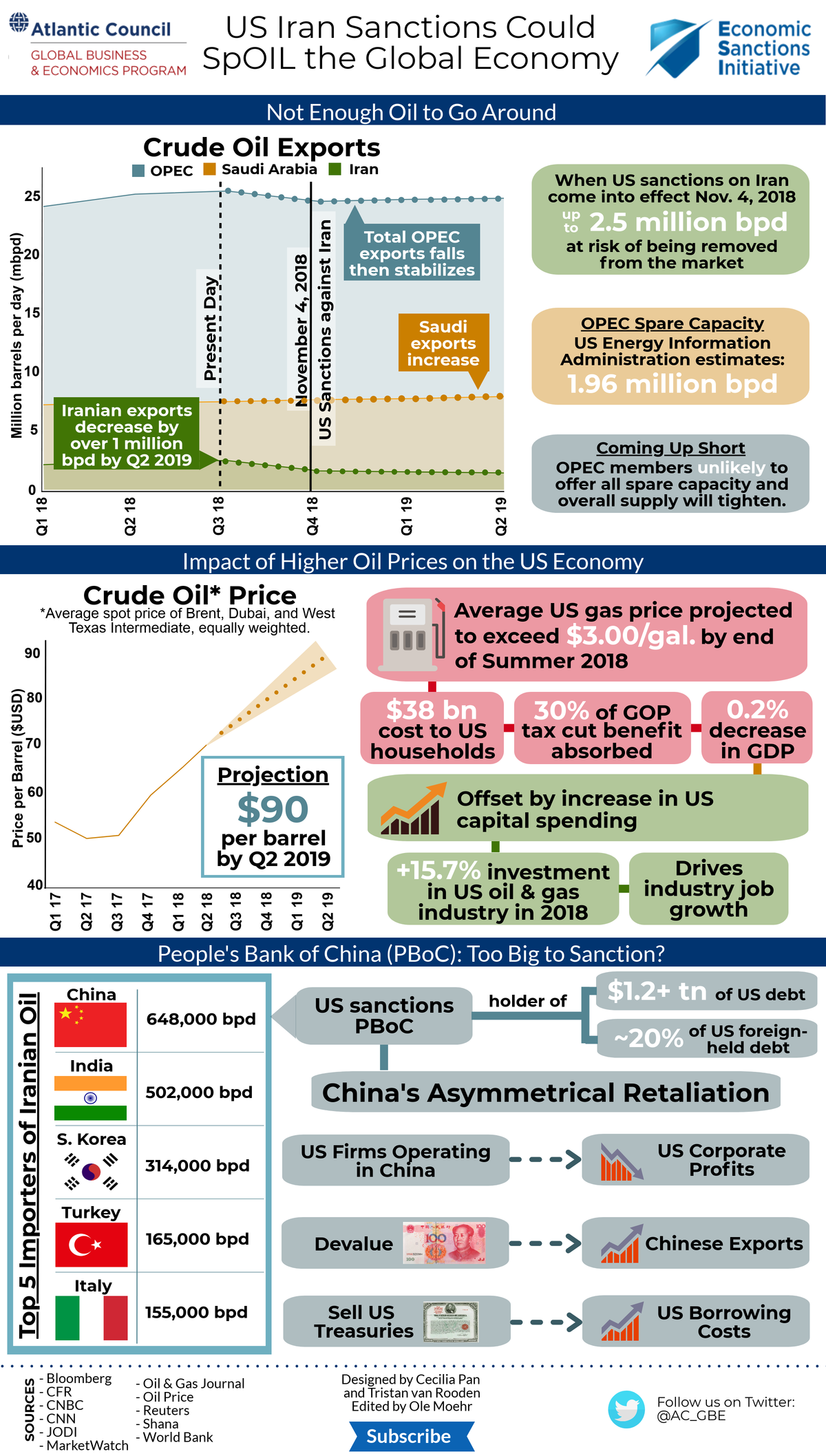
The Trump administration's sanctions posture has veered between maximum pressure and market triage. On 25 February, the Treasury Department imposed fresh sanctions targeting Iran's oil and missile networks as part of its "Economic Fury" strategy. Yet less than a month later, on 20 March, the same administration lifted sanctions on 140 million barrels of Iranian crude already loaded on vessels at sea — a move Treasury Secretary Scott Bessent described as "narrowly tailored" and temporary, aimed at easing fuel costs that had pushed US gasoline prices up 30 percent to $4 per gallon.
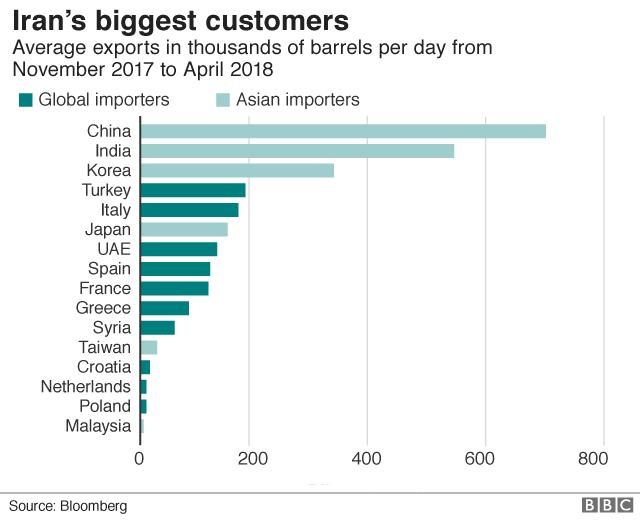
That waiver is set to expire on 19 April, and the Treasury has confirmed it will not be extended, reverting to full maximum pressure. Simultaneously, a US naval blockade of Iran aims to strangle Tehran's remaining 1.71 million barrels per day of crude exports — which at $90 per barrel represent nearly $5 billion in monthly revenue. The policy whiplash has left energy markets parsing every White House statement for direction. On 14 April, President Trump suggested discussions with Tehran "could resume within days", briefly pushing WTI below $92, but no concrete diplomatic framework has materialised.
GDP Shock and the Sovereign Wealth Buffer
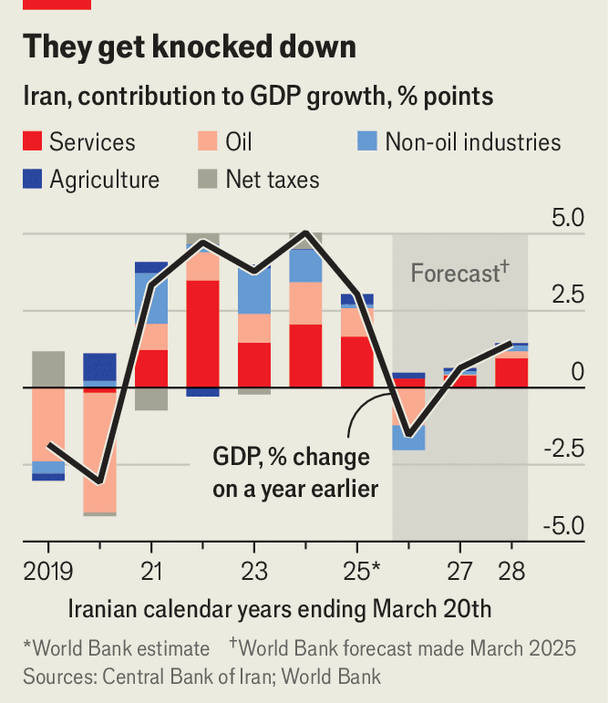
The macroeconomic toll is staggering. The IMF has forecast that Qatar's economy will contract 8.6 percent in 2026 — Goldman Sachs puts the figure closer to 14 percent — before a rebound of equal magnitude in 2027, contingent on reconstruction and restored export flows. The Fund has also warned that the global economy risks recession if the conflict persists, and has slashed growth forecasts across the Middle East. Oxford Economics estimates Gulf states collectively lost about 1 percent of GDP in the war's first month alone.
Qatar enters this crisis from a position of considerable financial strength. The state holds $72 billion in foreign exchange reserves and its sovereign wealth fund, the Qatar Investment Authority, commands assets estimated at $494 billion — roughly twice the country's annual GDP. These buffers ensure Qatar is nowhere near fiscal collapse. But they cannot substitute for the LNG revenue that underpins nearly 80 percent of government income, nor can they accelerate the multi-year timeline for repairing Ras Laffan. Fiscal surpluses that were projected at the start of 2026 have evaporated.
Doha's Strategic Recalibration
The war has injected urgency into a diversification debate that Gulf capitals have been conducting at a leisurely pace for over a decade. Analysts at AGBI noted in March that hostilities have revealed how even non-oil sectors — tourism, aviation, logistics — buckle under geopolitical shock, undermining the thesis that diversification alone insulates against conflict. The emerging consensus points toward a new diversification axis: artificial intelligence infrastructure, data centres, semiconductor ecosystems, and defence manufacturing — sectors that are less sentiment-driven and less physically concentrated than LNG terminals on a single coastline.
For Qatar specifically, the reconstruction of Ras Laffan presents both a burden and an opportunity to build redundancy into its LNG architecture — dispersed facilities, hardened infrastructure, and potentially new export routes that reduce dependence on a single maritime chokepoint. The lesson of 2026 is unambiguous: the physical concentration of hydrocarbon flows in critical chokepoints cannot be compensated for once a closure occurs. Doha's planners, and those across the Gulf, must now design an energy economy that accounts for the previously unthinkable.