Gaza's Humanitarian Crisis: The Stalled Ceasefire and Escalating Violence
As ceasefire talks falter, Gaza faces a deepening humanitarian crisis marked by violence and deprivation.
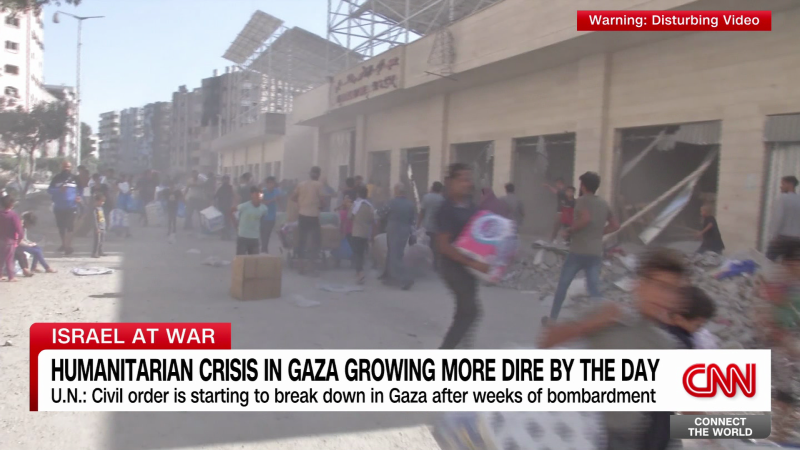
On October 7, 2023, the militant group Hamas launched a surprise attack on Israel, killing approximately 1,200 people and taking 251 hostages. This assault triggered a massive military response from Israel, resulting in tens of thousands of Palestinian casualties and further deepening the humanitarian crisis in the Gaza Strip.
The conflict's escalation has severely impacted the civilian population in Gaza, where over two million Palestinians reside. The Israeli military operations, which followed the initial attack, have led to widespread destruction and loss of life. According to reports from Amnesty International and Human Rights Watch, the Israeli actions have been described as genocidal, with significant death tolls among children, journalists, and healthcare workers. The humanitarian situation has been exacerbated by Israel's restriction of access to essential resources, including water. Since October 2023, the majority of Gaza's population has been deprived of the minimum water required for survival, contributing to disease and death.
The ongoing violence has not only resulted in immediate casualties but has also decimated Gaza's healthcare infrastructure, making it nearly impossible to track and address the full scale of the crisis. The blockade and military actions have left the region on the brink of famine, as noted by the British Red Cross, with humanitarian aid severely restricted. Despite international calls for a ceasefire, the conflict continues, with the humanitarian needs in Gaza growing more urgent by the day. The situation underscores the longstanding and complex nature of the Israeli-Palestinian conflict, rooted in historical territorial disputes and exacerbated by contemporary geopolitical dynamics.
Israeli policies have critically impaired access to clean water in Gaza, exacerbating the humanitarian crisis. Since October 2023, over two million Palestinians in the Gaza Strip have faced severe water shortages. According to Human Rights Watch, these restrictions have deprived the population of the minimum 15 liters per person per day required for survival in emergency situations. The scarcity of potable water has forced many to resort to drinking contaminated sources, including sea water, which poses significant health risks. This dire situation has been compounded by the decimation of Gaza's healthcare infrastructure, which has struggled to cope with the escalating public health crisis.
The destruction of medical facilities and the blockade on essential medical supplies have left the healthcare system in shambles, unable to adequately respond to the growing needs of the population. The lack of functioning hospitals and clinics has resulted in untracked and untreated diseases, further increasing the mortality rate. The true scale of the crisis remains unknown, as the healthcare system's capacity to monitor and report on health outcomes has been severely compromised. Reports suggest that thousands may have perished due to the combined effects of water scarcity and inadequate healthcare.
This catastrophic situation is a direct consequence of the prolonged conflict and the blockade imposed on Gaza, which has restricted the flow of humanitarian aid and essential goods. The international community has repeatedly called for unimpeded access to aid, yet the situation remains dire. As the conflict persists, the humanitarian needs in Gaza continue to escalate, with water and healthcare being among the most critical areas requiring immediate attention.
The roots of the Israeli-Palestinian conflict extend back to the late 19th century, primarily centered on territorial disputes. The emergence of Zionism as a national movement sought to establish a Jewish homeland in Palestine, which was then part of the Ottoman Empire. This movement encountered resistance from the Arab population, who viewed the land as their own. The conflict intensified following the end of World War I and the subsequent British Mandate over Palestine, which saw increased Jewish immigration and land purchases, further exacerbating tensions between Jewish and Arab communities.
Post-World War II developments, particularly the Holocaust, accelerated international support for a Jewish state, culminating in the United Nations' 1947 partition plan, which proposed separate Jewish and Arab states. The plan was accepted by Jewish leaders but rejected by Arab states, leading to the 1948 Arab-Israeli War. The war resulted in the establishment of the State of Israel and the displacement of hundreds of thousands of Palestinians, an event Palestinians refer to as the Nakba, or "catastrophe."
Over the decades, Israeli occupation of Palestinian territories, including the West Bank and Gaza Strip, following the 1967 Six-Day War, has been a focal point of contention. Israeli policies have been characterized by many as discriminatory, privileging Jewish Israelis over Palestinians in various aspects of life, as noted by Human Rights Watch. These policies have fueled ongoing resentment and resistance among Palestinians.
The rise of Hamas further complicated the political landscape. Emerging as an offshoot of the Muslim Brotherhood in 1987, Hamas gained prominence during the First Intifada, a Palestinian uprising against Israeli occupation. By 2007, Hamas had become the de facto governing authority in the Gaza Strip after violently ousting its rivals. Its designation as a terrorist organization by several countries, including the United States and Israel, has further polarized the situation, complicating peace efforts and contributing to the ongoing cycle of violence.
The international response to the humanitarian crisis in Gaza has been marked by urgent calls for intervention and accountability. Organizations such as Amnesty International and Human Rights Watch have issued reports accusing Israeli authorities of committing acts that could constitute genocide. These allegations are based on documented actions that have resulted in high civilian casualties, including children, journalists, and healthcare workers, as well as the deliberate obstruction of essential resources like water.
Despite these grave accusations, efforts to secure a lasting ceasefire have been repeatedly stalled. The ceasefire agreement reached in October 2025, which saw the release of hostages and prisoners, has not led to a significant reduction in hostilities. Instead, violence has persisted, exacerbating the humanitarian situation. The international community, including the United Nations, has emphasized the need for unimpeded humanitarian access to Gaza, where the situation has been classified as an IPC famine in certain areas. Such conditions demand immediate and sustained relief efforts to prevent further loss of life.
The role of the international community in addressing human rights abuses in Gaza is critical. Diplomatic efforts have been ongoing, with various nations and international bodies calling for accountability and adherence to international humanitarian law. However, geopolitical complexities and differing national interests have often hindered unified action. The persistent cycle of violence underscores the need for a comprehensive approach that addresses both immediate humanitarian needs and the underlying political issues fueling the conflict. Without such efforts, the prospect of lasting peace and stability in the region remains elusive.
The current status of ceasefire negotiations in Gaza is fraught with challenges, as talks have repeatedly stalled in the face of ongoing violence and deeply entrenched political complexities. Despite efforts to broker peace, previous agreements have consistently failed to establish lasting stability in the region. The ceasefire deal reached in October 2025, which involved the release of hostages and prisoners, exemplifies the temporary nature of such accords. While it provided a brief respite, it did not address the underlying tensions that continue to fuel the conflict.
External powers, particularly the United States, have played a significant role in attempting to mediate the conflict. Historically, the U.S. has been a key player in Israeli-Palestinian negotiations, often leveraging its influence to facilitate dialogue between the parties. However, the effectiveness of these interventions has been limited, as geopolitical interests and alliances complicate the pursuit of a neutral and balanced approach. The U.S. has faced criticism for its strong support of Israel, which some argue undermines its ability to act as an impartial mediator.
Furthermore, the involvement of other regional actors and international organizations has added layers of complexity to the negotiation process. Countries such as Egypt and Qatar have also engaged in mediation efforts, reflecting the broader regional implications of the conflict. However, the lack of a unified international stance and the divergent priorities of involved parties have hindered the development of a comprehensive peace strategy.
As violence continues unabated, the need for a durable ceasefire becomes increasingly urgent. The international community must navigate these political intricacies to foster an environment conducive to meaningful negotiations. Without a concerted effort to address both immediate and long-term issues, the cycle of conflict is likely to persist, perpetuating the humanitarian crisis in Gaza.
The humanitarian crisis in Gaza is not just a matter of statistics and political discourse; it is a deeply personal tragedy for the millions of people who call the region home. Firsthand accounts from Gaza reveal the harrowing conditions faced by civilians, who are caught in the crossfire of a protracted conflict. Displaced families are particularly vulnerable, struggling to find adequate shelter and resources in an environment where basic necessities are scarce.
One poignant story comes from a father in Rafah, who shared with Human Rights Watch that his family has been forced to drink sea water due to the severe shortage of potable water. This desperate measure underscores the extreme deprivation faced by many in Gaza, where access to clean water has been systematically obstructed since October 2023. The lack of safe drinking water has led to widespread disease, exacerbating the already dire health crisis in the region.
Despite these challenges, stories of resilience and courage emerge from the rubble. Families and communities have shown remarkable strength in the face of adversity, finding ways to support one another amidst the chaos. Local initiatives, often led by women and youth, have sprung up to provide makeshift education and healthcare services, highlighting the indomitable human spirit that persists even in the darkest times.
These personal narratives serve as a stark reminder of the human cost of the conflict in Gaza. They call for urgent international attention and action to alleviate the suffering of civilians and to work towards a sustainable resolution. As the world grapples with the complexities of the Israeli-Palestinian conflict, it is essential to keep the voices and experiences of those most affected at the forefront of the dialogue.
The prospects for a sustainable resolution to the conflict in Gaza remain fraught with challenges. The entrenched political and historical tensions between Israel and Palestine, compounded by the recent escalation of violence, create a complex landscape for peace negotiations. The stalled ceasefire, despite international efforts, highlights the difficulties in reaching a long-term agreement that addresses the core issues of sovereignty, security, and human rights.
Humanitarian aid remains a critical component in alleviating the immediate suffering of Gaza's population. However, the delivery of aid is often hindered by political barriers and security concerns. Ensuring unimpeded access to essential resources like water, food, and medical supplies is paramount. International organizations and regional actors must coordinate effectively to implement robust mechanisms that guarantee the safe passage of aid into the region.
A unified international approach is essential to support Gaza's recovery and to facilitate a viable peace process. This involves not only addressing the immediate humanitarian needs but also tackling the underlying causes of the conflict. Diplomatic efforts must prioritize the establishment of a framework that respects the rights and aspirations of both Israelis and Palestinians. This includes the potential for a two-state solution, which has long been advocated by various international bodies, as a means to achieve lasting peace.
Looking ahead, the international community must remain vigilant and proactive in its engagement with the Israeli-Palestinian conflict. Monitoring developments on the ground and maintaining pressure on all parties to adhere to international law will be crucial. The goal is to create an environment where dialogue can flourish, leading to a comprehensive and enduring resolution that ensures stability and prosperity for the people of Gaza and the broader region.