Gaza's Humanitarian Crisis Deepens as Ceasefire Talks Falter
The humanitarian crisis in Gaza escalates amid stalled ceasefire talks, revealing complex historical and political dynamics.
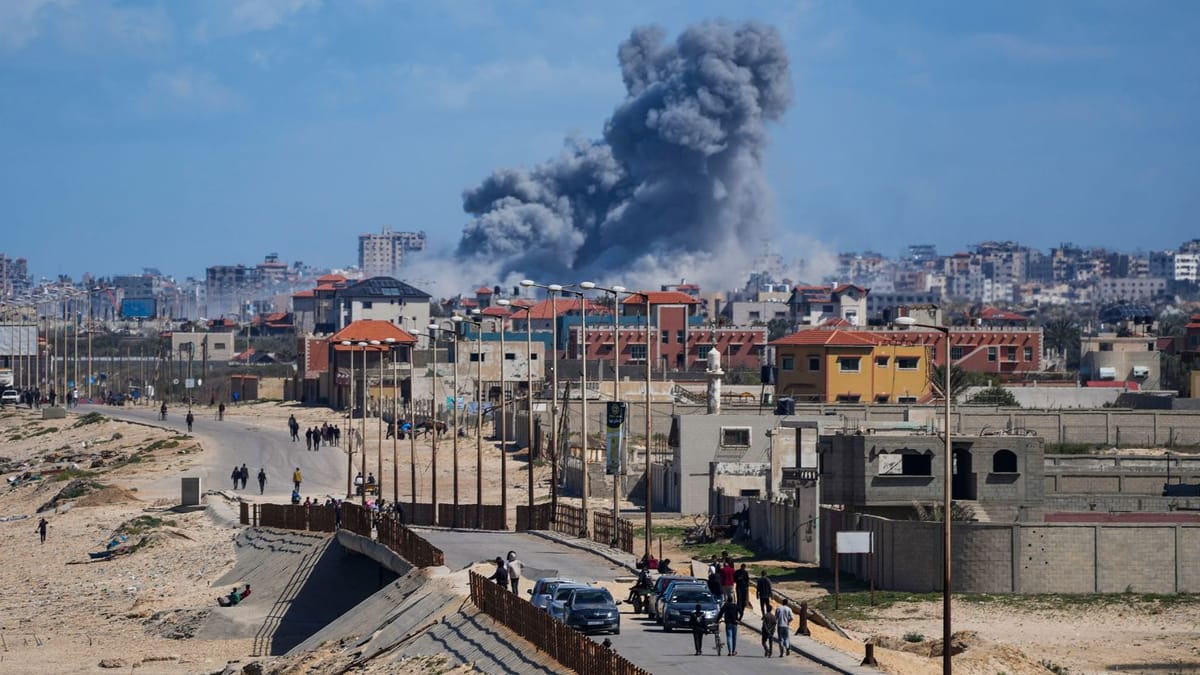
The humanitarian crisis in Gaza has reached a critical juncture as ceasefire negotiations have stalled, exacerbating the dire conditions for its civilian population. The most significant recent escalation began on May 10, 2021, when hostilities erupted following tensions in East Jerusalem, particularly around the Al-Aqsa Mosque, and the threatened eviction of Palestinian families in the Sheikh Jarrah neighborhood. This conflict quickly spiraled into a full-scale military confrontation between Israel and Hamas, resulting in extensive casualties and infrastructure damage.
The timeline of events leading to the current crisis is marked by a series of violent escalations and retaliatory actions. On May 10, 2021, following days of clashes in Jerusalem, Hamas launched a barrage of rockets towards Israeli cities, prompting a swift and forceful military response from Israel. Over the course of 11 days, Israeli airstrikes targeted numerous locations across Gaza, including residential buildings, media offices, and key infrastructure, leading to significant destruction and loss of life. According to the United Nations Office for the Coordination of Humanitarian Affairs (OCHA), more than 250 Palestinians were killed, including at least 66 children, while over 2,000 were injured. On the Israeli side, 13 people were killed, including two children.
The ceasefire brokered on May 21, 2021, provided a temporary reprieve but failed to address the underlying issues fueling the conflict. Subsequent flare-ups, such as the renewed violence in August 2022, have further strained the fragile peace. The blockade imposed by Israel and Egypt continues to severely limit the movement of goods and people, crippling Gaza's economy and exacerbating humanitarian needs. The destruction of critical infrastructure, including power plants and water facilities, has left much of the population without access to basic services, compounding the suffering of Gaza's residents.
The roots of the Israeli-Palestinian conflict are deeply embedded in a complex history of territorial disputes, national identity, and political sovereignty. The conflict traces back to the early 20th century, with the decline of the Ottoman Empire and the subsequent British Mandate over Palestine. The Balfour Declaration of 1917, which expressed British support for a "national home for the Jewish people" in Palestine, sowed the seeds of discord between Jewish and Arab communities.
The establishment of the State of Israel in 1948, following the United Nations Partition Plan, led to the first Arab-Israeli war. The conflict resulted in the displacement of hundreds of thousands of Palestinians, an event Palestinians refer to as the Nakba, or "catastrophe." The 1967 Six-Day War further intensified tensions, as Israel occupied the West Bank, Gaza Strip, East Jerusalem, and other territories, leading to ongoing disputes over land and sovereignty.
Political factors have continually influenced the situation in Gaza. The Oslo Accords of the 1990s, which aimed to establish a framework for peace and Palestinian self-governance, ultimately failed to resolve key issues such as borders, refugees, and the status of Jerusalem. The rise of Hamas, particularly after its electoral victory in 2006 and subsequent control of Gaza, has added another layer of complexity. Hamas's refusal to recognize Israel and its designation as a terrorist organization by many countries have hindered diplomatic efforts.
Repeated attempts at peace, including the Camp David Summit in 2000 and the Annapolis Conference in 2007, have failed to achieve lasting solutions. The continued expansion of Israeli settlements in the West Bank and the blockade of Gaza have further entrenched divisions. These historical grievances and political dynamics have perpetuated a cycle of violence and mistrust, complicating efforts to achieve a sustainable peace and contributing to the current humanitarian crisis in Gaza.
The ongoing crisis in Gaza involves several key actors, each with distinct positions and interests. Israel, citing security concerns and the need to protect its citizens from rocket attacks, maintains a blockade on Gaza, which it argues is necessary to prevent the smuggling of weapons to Hamas. Israel's government, led by Prime Minister Benjamin Netanyahu, has consistently emphasized its right to self-defense while expressing a willingness to engage in peace talks under certain conditions, including the recognition of Israel as a Jewish state.
Hamas, the Islamist political and militant group that governs Gaza, remains a central player. It refuses to recognize Israel and is committed to what it describes as the liberation of Palestinian territories. Hamas's military wing has been responsible for launching rockets into Israeli territory, actions it justifies as resistance against occupation. The group's stance complicates ceasefire negotiations, as its demands often include the lifting of the blockade and the release of Palestinian prisoners.
The Palestinian Authority (PA), led by President Mahmoud Abbas and based in the West Bank, represents another significant actor. The PA has been involved in peace negotiations with Israel but has been sidelined in Gaza due to Hamas's control. The PA advocates for a two-state solution and has called for international intervention to alleviate the humanitarian crisis in Gaza.
External actors play crucial roles in the dynamics of the Gaza crisis. The United States, a key ally of Israel, has historically supported Israel's security concerns while also endorsing a two-state solution. However, its influence is often viewed as biased by Palestinian factions. Egypt, sharing a border with Gaza, acts as a mediator in ceasefire talks, leveraging its unique position to facilitate dialogue between Israel and Hamas. Egypt's involvement is driven by both security concerns over instability in Gaza and its geopolitical interests in maintaining regional influence.
The situation in Gaza is governed by a complex framework of international laws and United Nations resolutions aimed at addressing the conflict and humanitarian issues. One of the cornerstone documents is the UN Security Council Resolution 242 of 1967, which calls for the withdrawal of Israeli armed forces from territories occupied in the Six-Day War and the acknowledgment of every state's right to live in peace within secure and recognized boundaries. This resolution has been a basis for subsequent peace negotiations, although its implementation remains incomplete.
Another significant document is the UN Security Council Resolution 1860, adopted in 2009, which calls for an immediate ceasefire and the unimpeded provision of humanitarian assistance to Gaza. Despite these resolutions, the blockade imposed by Israel, citing security concerns, continues to restrict the flow of goods and people, exacerbating the humanitarian crisis.
International humanitarian law, including the Fourth Geneva Convention, applies to the situation in Gaza. This convention outlines the obligations of occupying powers to protect civilian populations. Reports by human rights organizations frequently cite violations of these laws, particularly concerning the protection of civilians and the provision of essential services.
Recent legal actions have also impacted the conflict. In 2021, the International Criminal Court (ICC) launched a formal investigation into alleged war crimes committed in the Palestinian territories, including Gaza. This investigation has been met with resistance from Israel, which does not recognize the court's jurisdiction, and support from Palestinian authorities seeking accountability for actions during conflicts.
The ongoing legal and diplomatic efforts underscore the challenges in resolving the Gaza crisis, as entrenched positions and geopolitical interests continue to hinder the implementation of international law and UN resolutions. These legal frameworks remain crucial in advocating for the rights and protections of civilians amid the protracted conflict.
The humanitarian crisis in Gaza has reached alarming levels, with numerous reports from non-governmental organizations highlighting the severe impact on civilians. According to the United Nations Office for the Coordination of Humanitarian Affairs (OCHA), the blockade and ongoing hostilities have resulted in dire living conditions for the approximately two million residents of Gaza. As of 2023, the World Health Organization (WHO) has reported significant shortages of essential medical supplies, exacerbating the health crisis in the region.
Human rights organizations such as Human Rights Watch and Amnesty International have documented extensive civilian casualties resulting from military operations. In the latest escalation, hundreds of civilians, including women and children, have been killed or injured. The destruction of infrastructure, including homes, schools, and hospitals, has further compounded the humanitarian challenges. The lack of access to clean water and electricity remains a critical issue, with the United Nations Relief and Works Agency for Palestine Refugees in the Near East (UNRWA) noting that over 90% of the water in Gaza is unfit for human consumption.
Humanitarian access is severely restricted, with aid organizations facing significant obstacles in delivering much-needed supplies. The blockade, coupled with security concerns, has limited the entry of humanitarian aid, leading to shortages of food, medicine, and other essential goods. The International Committee of the Red Cross (ICRC) has repeatedly called for unimpeded access to provide relief to the affected population.
The psychological impact on the Gazan population is profound, with widespread trauma reported among children and adults alike. The constant threat of violence, coupled with the loss of homes and loved ones, has led to a mental health crisis. Organizations such as Médecins Sans Frontières (Doctors Without Borders) have highlighted the urgent need for mental health services to address the psychological scars left by the conflict.
The deepening humanitarian crisis in Gaza has significant implications for the economic and strategic interests of Gulf countries, particularly Qatar. As a nation that has historically played a mediating role in the Israeli-Palestinian conflict, Qatar's involvement is driven by both humanitarian concerns and strategic calculations. The blockade and hostilities in Gaza threaten regional stability, a critical factor for Gulf nations that rely on secure and stable environments for their economic prosperity.
Qatar has been a major donor to Gaza, providing substantial financial aid aimed at reconstruction and humanitarian relief. This assistance not only alleviates immediate suffering but also positions Qatar as a key player in regional diplomacy. The ongoing crisis, however, complicates these efforts as continued violence undermines reconstruction projects and disrupts the delivery of aid. The blockade imposed on Gaza restricts the flow of goods and services, impacting Qatar's ability to fulfill its commitments effectively.
For Gulf countries, the conflict in Gaza also intersects with broader geopolitical dynamics, including relations with Israel and the United States. The Abraham Accords, which saw several Gulf states normalize relations with Israel, have shifted regional alliances and economic partnerships. While Qatar has not joined these accords, it maintains a pragmatic approach, balancing its support for Palestinian rights with the need to engage with key international stakeholders.
The protracted conflict in Gaza poses risks to regional economic ties, as instability can deter investment and disrupt trade routes. Gulf countries, with their strategic interests in maintaining open and secure maritime pathways, are acutely aware of the potential economic fallout from prolonged hostilities. Thus, the resolution of the Gaza crisis remains a priority for Gulf nations, who seek to safeguard their economic interests while promoting regional peace and stability.
International responses to the stalled ceasefire talks in Gaza have been marked by a mix of diplomatic engagement and public outcry. The United Nations has repeatedly called for an immediate cessation of hostilities, with Secretary-General António Guterres emphasizing the urgent need for humanitarian access and protection of civilians. The European Union has echoed these calls, urging both parties to return to negotiations and prioritize civilian safety. Meanwhile, the United States has maintained its support for Israel's right to self-defense while also advocating for measures to alleviate the humanitarian crisis.
Regionally, Egypt has played a pivotal role in mediating ceasefire efforts, leveraging its geographical and political position to facilitate dialogue between Hamas and Israel. Jordan and Turkey have vocally condemned the violence, with Turkish President Recep Tayyip Erdoğan particularly critical of Israeli actions in Gaza. The Arab League has issued statements of solidarity with the Palestinian people, calling for international intervention to halt the escalation.
Public sentiment across the globe has manifested in widespread protests, with demonstrations in cities from London to Jakarta expressing solidarity with Gaza and demanding an end to the violence. Social media platforms have amplified these voices, creating a global discourse around the humanitarian situation.
Looking ahead, the international community must closely monitor the developments in Gaza, particularly the potential for renewed ceasefire negotiations. The role of key regional actors like Egypt and Qatar will be crucial in facilitating dialogue and ensuring the delivery of humanitarian aid. The possibility of further escalation remains a significant concern, with any breakdown in talks potentially leading to increased violence. Observers should watch for shifts in U.S. policy and any changes in the stance of Gulf countries, as these could influence the trajectory of the conflict. Ultimately, the resolution of the Gaza crisis hinges on sustained diplomatic efforts and a commitment to addressing the underlying political issues driving the conflict.